
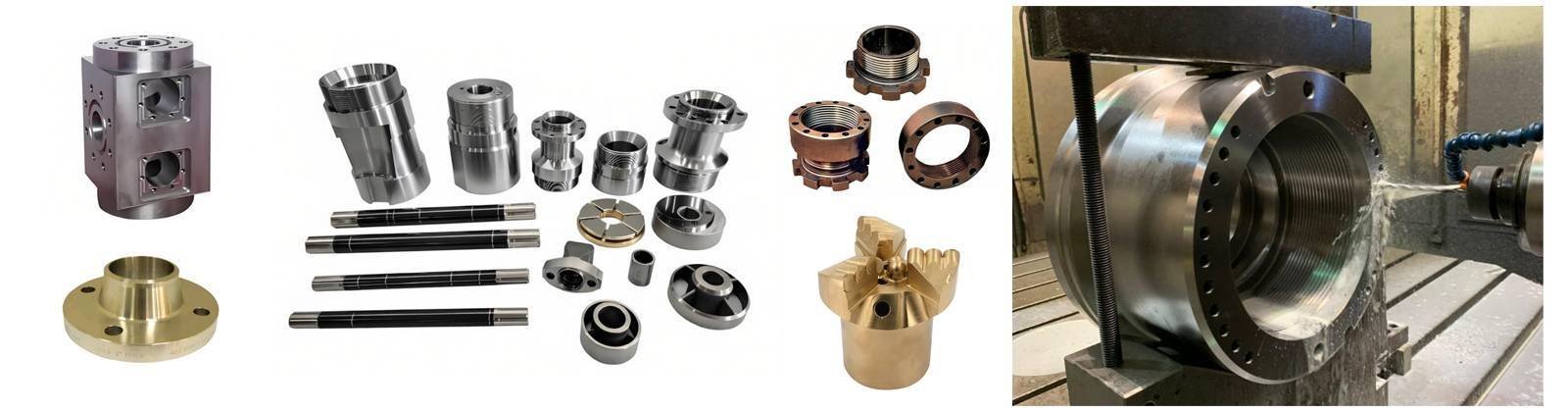
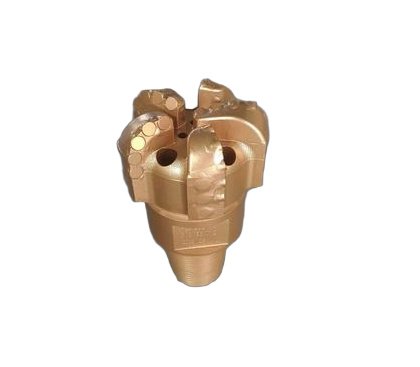
The drill bit represents the single most critical interface between drilling technology and geological formation. In an industry where daily operating costs routinely exceed $500,000 for offshore rigs and $50,000 for land operations, bit selection directly dictates project economics, non-productive time (NPT), and ultimate wellbore quality. Yet, the transition from traditional roller cone systems to advanced polycrystalline diamond compact (PDC) matrices—and now to intelligent, sensor-embedded hybrid designs—has fundamentally altered selection criteria beyond simple formation hardness classifications.
This analysis examines the engineering specifications, material compositions, and field-proven applications of modern drilling bits, providing procurement teams and drilling engineers with the technical foundation required to optimize rate of penetration (ROP) while minimizing cost-per-foot in diverse downhole environments.
Oil & Gas Drill Bits Overview Table
| Drill Bit Type | Classification | Shape / Structure Feature | Body Material | Typical Application | Formation Suitability |
|---|---|---|---|---|---|
| Taper Bits | Shape & Structure | Tapered shank, tapered working face (cone-shaped end) | Alloy steel | Vertical wells, pilot drilling | Soft to medium-hard |
| Thread Bits | Structure & Connection | Threaded connection or cutting structure | Alloy steel | Interchangeable bits for drilling assemblies | Soft to hard formations |
| Tricone Drill Bits | Structure Components | Three rotating cone cutting structures | Steel / Cast steel | Medium to hard formations, directional drilling | Medium-hard to hard |
| Cross Bits | Shape | Cross-shaped cutting head with four wings | Alloy steel | Broad formation contact drilling, soft formations | Soft to medium-hard |
| Conical Drill Bit | Shape | Overall conical, tapered geometry | High-strength steel | Pilot holes, vertical wells | Soft to medium-hard |
| Cone Drill Bit | Shape & Structure | Cone-shaped cutting element or conical profile | Steel / Alloy steel | Hard formations, exploratory wells | Medium-hard to hard |
| PDC Drill Bit | Cutter Type | Flat or slightly curved diamond cutters on steel body | High-strength steel | Horizontal wells, high-speed drilling | Soft to medium-hard |
| Hybrid Drill Bit | Cutter Type | Combination of PDC and cone teeth | Alloy steel | Complex formations, high abrasion | Soft to hard |
| Reaming Bit | Special Purpose | Blade structure to expand borehole | Steel | Hole expansion, sidetracking | Soft to medium-hard |
| Core Bit | Special Purpose | Diamond-impregnated cutting crown | Steel | Core sampling, geological analysis | Hard rock |
| Extreme Environment Bit | Special Purpose | High-temperature/high-pressure resistance, reinforced profile | High-strength alloy + coating | HPHT wells, offshore drilling | Hard rock, carbonates, salt |
Major Drill Bit Categories: Engineering Fundamentals
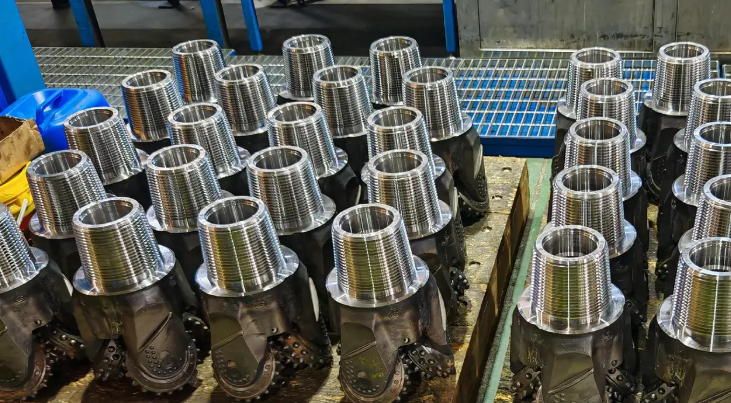
Roller Cone (Tricone) Bits: The Legacy Standard
Despite comprising less than 30% of new bit purchases in North American shale plays, tricone bits retain dominance in specific geological contexts. These tungsten carbide bits utilize three rotating cones with milled steel or tungsten carbide insert (TCI) teeth that crush and gouge formation through a combination of impact and shearing forces.
Critical Applications:
- Deep, hard carbonates and chert: Where impact resistance supersedes shearing efficiency
- Variable formation sequences: Self-adjusting cone action accommodates unpredictable lithology changes
- High-temperature geothermal wells: Metallic construction withstands >300°F environments where PDC binder degradation accelerates
The engineering limitation remains bearing life. Journal bearing systems with specialized elastomer or metal-face seals typically deliver 80–120 rotating hours, whereas sealed roller bearings extend operational windows to 150+ hours in optimal mud conditions.
Fixed Cutter Bits (PDC): The Efficiency Standard
Polycrystalline diamond compact bits now drill approximately 70% of total worldwide footage, attributed to their shearing mechanism that requires 30–40% less weight-on-bit (WOB) than crushing alternatives. A typical steel-body or matrix-body PDC bit employs synthetic diamond cutters bonded to tungsten carbide substrates, arranged in specific blade counts and back-rake angles optimized for formation plasticity.
Material Architecture:
- Steel bodies: Machined from 4145H alloy steel; ideal for complex hydraulic designs and directional drilling where fatigue resistance is paramount. Limitation: erosion susceptibility in high-solids drilling fluids.
- Matrix bodies: Infiltrated tungsten carbide powder (90–95% WC with nickel/copper binders); superior erosion resistance and gauge protection, but restricted to simpler geometries due to infiltration manufacturing constraints.
Natural and Synthetic Diamond Bits
Impregnated diamond bits—utilizing synthetic diamond grit suspended within a powdered metal matrix—address ultra-hard, abrasive formations (Mohs hardness >7) where PDC cutters experience catastrophic thermal mechanical fatigue. These bits function through continuous matrix erosion, exposing fresh cutting diamonds while worn grit flushes through hydraulics. Applications include basement drilling, volcanic sequences, and hard conglomerates where traditional bits average <5 ft/hr ROP.
Material Science and Design Specifications
Cutter Technology Evolution
Modern PDC cutters have evolved beyond standard ¼-inch cylindrical designs. Leached (thermally stable) PDC removes cobalt catalyst from the diamond table, extending thermal tolerance from 750°C to 1,200°C—critical for high-speed drilling in dry gas formations where frictional heat accumulation outpaces cooling rates.
Cutter Geometry Innovations:
- Chamfer configurations: 45° or 20° chamfers distribute impact loads across the diamond table, reducing spalling in interbedded formations by up to 40% compared to flat-faced cutters.
- Non-planar interfaces: Dome, cone, or double-chamfer geometries improve impact resistance by 25–35% in laboratory drop-test simulations.
Hydraulic Architecture
Computational Fluid Dynamics (CFD) modeling has revolutionized junk slot design and nozzle orientation. Modern matrix-body PDC bits utilize extended gauge pads with spiral designs and multi-stage flow channels that reduce cuttings bed formation in high-angle wells (>60° inclination) by maintaining annular velocities above 120 ft/min even in extended-reach drilling (ERD) scenarios.
Application-Specific Selection Matrix
Soft to Medium Claystone/Shale (8,000–15,000 psi UCS)
Recommended Configuration: Medium blade count (6–7 blades), high cutter density (16–19mm cutters), aggressive back-rake (15–20°), steel body construction.
Engineering rationale: High ROP (150–300 ft/hr) requires efficient cuttings evacuation. Deep face volumes prevent bit balling in gumbo shale—a phenomenon that reduces ROP by 60% when clay adherence blocks cutter engagement. Steel bodies accommodate complex junk slot geometries for enhanced hydraulics.
Hard, Abrasive Sandstone and Limestone (>25,000 psi UCS)
Recommended Configuration: High blade count (8+ blades), dual-row cutter arrangement, matrix body with diamond-impregnated gauge protection, shallow back-rake (10–15°).
Field data from Permian Basin Wolfcamp operations demonstrate that matrix-body PDC bits with premium cutters achieve 40% longer total footage (2,400 ft vs. 1,700 ft) compared to standard steel alternatives in abrasive siliceous intervals, despite 15% higher initial capital cost.
Directional and Extended Reach Drilling
Steerable motor and rotary steerable system (RSS) applications demand active gauge protection and torque response management. Bits engineered with torsional resonance mitigation—via specific cutter back-rake variations and anti-whirl gauge pad configurations—reduce stick-slip severity by 50%, maintaining toolface orientation within ±5° tolerance during sliding intervals.
Performance Metrics and Economic Analysis
Quantifying Bit Efficiency
Beyond simple ROP, the industry standard Cost Per Foot (CPF) calculation remains:
In Marcellus Shale horizontal laterals, advanced PDC bits with diamond-enhanced inserts demonstrate CPF reductions of $12–$18 per foot compared to conventional designs—a significant multiplier when lateral lengths extend 10,000+ feet.
Dull Grading and Failure Analysis
The IADC (International Association of Drilling Contractors) dull grading system provides standardized failure documentation:
- PDC Primary Wear Modes: Chipping (CT), breakage (BT), and erosion (ER) of cutters; body erosion (BE) in high-solids environments.
- Tricone Critical Failures: Bearing failures (BF), gauge loss (LG), and lost teeth (LT).
Analysis of 340 bit runs in the North Sea revealed that 65% of PDC failures resulted from impact damage in interbedded sequences—directing engineering focus toward enhanced cutter impact resistance rather than pure abrasion resistance.
Emerging Technologies and Operational Considerations
Hybrid Bit Technology
Combining rolling elements with fixed cutters, hybrid bits address transitional formations where pure PDC bits suffer impact damage and tricones deliver insufficient ROP. Recent deployments in the Norwegian Continental Shelf achieved 25% ROP improvements in interbedded shale/sandstone sequences while reducing torque fluctuations by 30%—critical for maintaining borehole quality in narrow-margin drilling windows.
Integrated Sensor Systems
The next generation of "smart bits" incorporates near-bit vibration sensors and formation evaluation resistivity subsystems. Real-time data transmission via mud pulse telemetry enables immediate WOB/RPM adjustments, preventing catastrophic cutter damage and extending bit life by 20–30% in uncertain geological environments.
Strategic Procurement Considerations
When evaluating bit suppliers, engineering teams should prioritize:
- Application-specific modeling capabilities: Suppliers offering finite element analysis (FEA) of specific formation mineralogy versus generic catalog selections.
- Supply chain redundancy: Manufacturing lead times for matrix-body bits (6–8 weeks) versus steel-body alternatives (3–4 weeks) impact inventory strategies.
- Repair and recycle programs: PDC bit reconditioning can reduce replacement costs by 40–50% for non-critical sections, provided cutter retention integrity exceeds 80%.
The optimal drill bit represents not merely a cutting tool, but a precisely engineered solution matching formation mechanics, hydraulic requirements, and directional objectives. By grounding selection decisions in material science fundamentals and quantitative performance data rather than historical preference, operators consistently achieve measurable reductions in drilling cycle times and mechanical specific energy (MSE)—the definitive metrics of modern drilling economics.
