
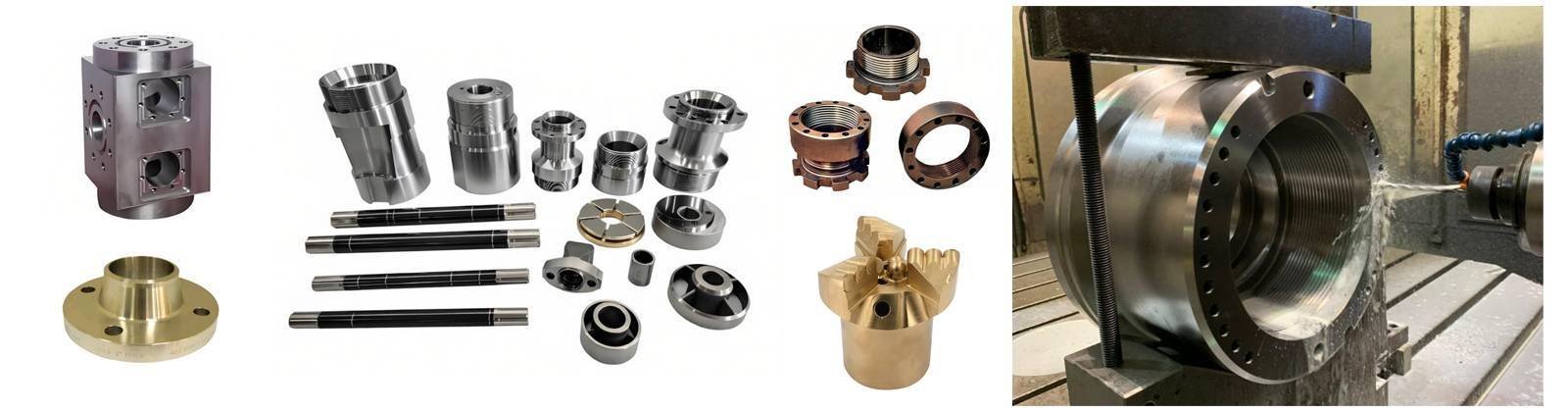
Bushings are essential mechanical components in the oil and gas industry, providing support, guidance, friction reduction, vibration isolation, and protection against wear and corrosion. From drilling rigs to pipelines and pumps, bushings ensure smooth, reliable operation under high-pressure, high-temperature, and corrosive conditions.
Bushing Basics
Primary Functions
Bushings, also known as sleeves, liners, or bearings, are used to support moving parts and reduce wear. Their main functions include:
- Support: Provide stable support for rotating or sliding shafts, preventing excessive movement and reducing stress on other components.
- Guidance: Ensure precise alignment of moving parts (e.g., drill bits, pump shafts), maintaining operational accuracy even under high loads.
- Friction Reduction: Create a low-friction interface between moving parts, minimizing energy loss and reducing wear on both the bushing and the component it supports.
- Vibration Isolation: Absorb and dampen vibrations generated by equipment (e.g., compressors, drilling rigs), protecting sensitive components and improving operator comfort.
- Wear & Corrosion Protection: Act as a sacrificial component that wears over time, protecting more expensive equipment (e.g., shafts, pipelines) from damage caused by friction, corrosion, or debris.
Key Physical Properties
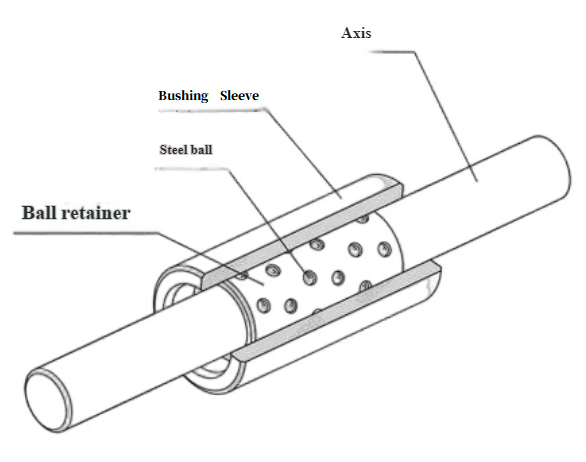
The performance of a bushing in oil & gas applications depends on four key physical properties, which must be matched to the operating environment:
- Friction Coefficient: A lower friction coefficient reduces energy loss and wear; critical for high-speed or continuous-operation equipment (e.g., pumps, compressors).
- Wear Resistance: The ability to withstand repeated contact and friction without excessive degradation—essential for components in drilling or pipeline systems that operate continuously for long periods.
- Corrosion Resistance: Vital for offshore or harsh environments where bushings are exposed to saltwater, sour gas (H₂S), CO₂, or corrosive hydrocarbons.
- Load-Bearing Capacity: The maximum load (radial or axial) the bushing can support without deformation; critical for heavy-duty applications like drilling rigs and high-pressure pipelines.
Bushings vs. Bearings
| Feature | Bushings | Rolling-Element Bearings |
|---|---|---|
| Design | Simple, sleeve-like structure; no rolling elements (sliding motion) | Complex design with inner/outer rings and rolling elements (balls/rollers) |
| Friction | Sliding friction (higher than rolling, but manageable with lubrication/self-lubricating materials) | Rolling friction (lower, ideal for high-speed applications) |
| Load Capacity | Excellent for high radial loads; moderate axial loads | Handles both radial and axial loads; better for high-speed, heavy-load applications |
| Maintenance | Low maintenance (especially self-lubricating types); easy to replace | Higher maintenance; requires precise alignment and regular lubrication |
| Cost | Cost-effective, especially for large-scale or simple applications | More expensive due to complex design |
| Oil & Gas Use Cases | Pipelines, drill guides, pump shafts, offshore platforms (corrosive/harsh environments) | High-speed compressors, turbine systems, precision drilling equipment |
Materials Library
The choice of bushing material is critical to performance in oil & gas applications, as it directly impacts durability, corrosion resistance, and service life. Below is a detailed breakdown of the most common bushing materials, their properties, and typical oil & gas uses—along with a performance comparison to help you make informed decisions.
Comparison Table
| Bushing Type | Material / Variant | Key Properties | Typical Applications |
|---|---|---|---|
| Metal | Steel | High-strength, wear-resistant; handles heavy loads; carbon steel is cost-effective, alloy steel has enhanced strength & temperature resistance | Drilling rigs, pump shafts, pipeline supports |
| Bronze (tin bronze, aluminum bronze, leaded bronze) | Low friction, excellent wear resistance, good corrosion resistance; tin bronze for low-friction parts, aluminum bronze for high strength & saline corrosion, leaded bronze for machinability | Drilling equipment, valves, offshore applications | |
| Stainless Steel (e.g., 316 SS) | Corrosion-resistant, suitable for harsh environments; good for subsea or corrosive fluids | Pipeline connections, subsea equipment, offshore platforms | |
| Aluminum Alloys | Lightweight, corrosion-resistant, good thermal conductivity; less durable for heavy loads | Portable drilling equipment, offshore platforms, low-to-medium load applications | |
| Plastic | PTFE | Low friction, self-lubricating, excellent corrosion resistance; suitable for low-to-medium load, low-speed; lower temperature resistance than metals | Subsea pipelines, chemical processing, areas difficult to lubricate |
| PEEK | High temperature resistance (up to 260°C), high strength, corrosion-resistant | Pump and compressor shafts, high-temperature applications | |
| Composite | Graphite-Filled Composites | Self-lubricating, high wear resistance, good temperature resistance | High-load, high-temperature drilling rigs, compressors |
| Ceramic Composites | Extremely hard, wear-resistant, corrosion-resistant; brittle and costly | High-temperature pipelines, chemical processing | |
| Metal-Polymer Composites | Metal backing for strength, polymer overlay (e.g., PTFE) for low friction; combines load capacity with corrosion resistance | Versatile applications across oil & gas, pumps, compressors, pipelines |
Material Selection Guide
To select the right bushing material for your oil & gas application, consider the following key operating conditions:
- Temperature: For high-temperature applications (above 250°C), choose ceramic composites, PEEK, or stainless steel. For low-temperature applications (below -40°C), opt for PTFE or stainless steel.
- Pressure: High-pressure systems (above 10,000 psi) require high-strength materials such as steel, bronze, or ceramic composites. Low-to-medium pressure systems can use plastic or composite bushings.
- Corrosion: For corrosive environments (offshore, sour gas, chemical processing), select stainless steel, PTFE, PEEK, or ceramic composites. Avoid uncoated steel in these scenarios.
- Load: Heavy-load applications (drilling rigs, high-pressure pumps) require metal or composite bushings. Light-to-medium loads can use plastic or aluminum alloy bushings.
- Lubrication Availability: If external lubrication is difficult (e.g., subsea applications), choose self-lubricating materials such as PTFE, graphite-filled composites, or sintered bronze.
Common Bushing Types
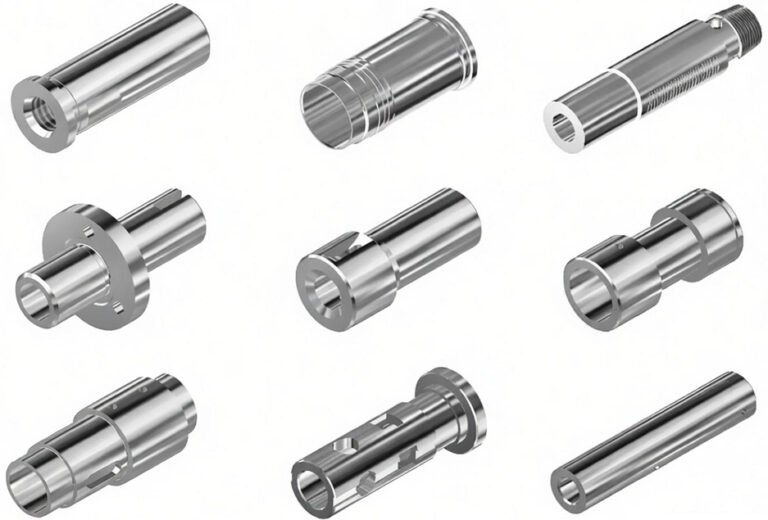
- Camshaft Bushing – Guides the rotation of camshafts in engines, drilling machinery, and pumps. Ensures precise alignment and reduces friction in high-speed rotating systems. Typical materials: Bronze, steel, or graphite-filled composites.
- Shaft Bushing – Supports rotating shafts in pumps, compressors, and drilling equipment. Reduces wear on shafts and housing, extending the life of critical components. Typical materials: Bronze, stainless steel, or PEEK.
- Drill Guide Bushing / Drill Bushing – Ensures precise drill positioning in drilling rigs and wellbore operations. Prevents drill bit deviation, improving accuracy and efficiency. Typical materials: Steel, stainless steel, or ceramic composites.
- Metal Bushing Sleeve – A cylindrical metal sleeve designed to enhance wear resistance and load capacity of shafts or pipelines. Used in heavy-duty applications where durability is critical. Typical materials: Steel, bronze, or stainless steel.
- Stainless Bushing – Corrosion-resistant bushing ideal for offshore platforms, saltwater applications, and corrosive pipelines. Resists damage from saltwater, sour gas, and other harsh fluids. Typical material: 316 stainless steel.
- Steel Bushing – High-strength bushing for heavy-load applications such as drilling rigs, pump shafts, and pipeline supports. Offers excellent wear resistance and load-bearing capacity. Typical material: Carbon steel or alloy steel.
- Bronze Bushing – Low-friction, wear-resistant bushing ideal for rotating shafts in pumps, valves, and drilling equipment. Available in various alloys (tin, aluminum, leaded) for different applications. Typical material: Bronze alloy.
- Pipe Bushing – Used for pipeline connections and reinforcements. Reduces stress at connection points, prevents leaks, and ensures alignment between pipes of different sizes. Typical materials: Steel, stainless steel, or bronze.
- Tie Rod Bushing – Supports tie rods in drilling rigs, offshore platforms, and pipeline systems. Isolates vibrations and reduces wear on tie rod components. Typical materials: Rubber, plastic, or composite.
- Black Pipe Bushing – A specialized pipe bushing made from black steel, designed for oil and gas pipeline systems. Offers high strength and durability for underground or above-ground pipelines. Typical material: Black carbon steel.
- Sleeve Bushing – A simple slip-fit bushing that provides basic support and friction reduction for shafts. Easy to install and replace, making it ideal for low-to-medium load applications. Typical materials: Bronze, plastic, or steel.
- Suspension Bushing – Dampens vibrations in drilling rigs, offshore platforms, and pump systems. Reduces noise and protects sensitive components from vibration damage. Typical materials: Rubber, composite, or PTFE.
- Hex Bushing – Used for pipeline connections or fastener adaptation. Features a hexagonal shape for easy installation and removal, ideal for tight spaces. Typical materials: Steel, stainless steel, or bronze.
- Flange Bushing – Supports flanged connections and high-load shafts in pumps, compressors, and pipelines. The flange prevents axial movement and provides additional support. Typical materials: Steel, bronze, or stainless steel.
- Spherical Bushing – Allows multi-directional motion compensation or minor alignment adjustments. Ideal for offshore platforms, drilling rigs, and other applications where misalignment may occur. Typical materials: Steel, bronze, or composite.
Applications
Bushings are integral to nearly every aspect of oil & gas operations, from drilling and production to transportation and processing. Below are the key scenarios where bushings play a critical role, along with details on how they contribute to system reliability and efficiency.
Drilling Equipment
Drilling rigs operate under extreme mechanical stress, high temperatures, and harsh conditions, making bushings essential for maintaining performance and safety. Bushings are used in several key components:
- Drill Rods: Sleeve bushings and drill guide bushings ensure precise alignment of drill rods, preventing deviation and improving drilling accuracy. Bronze or steel bushings are commonly used here for their wear resistance and load capacity.
- Rotating Parts: Camshaft bushings and shaft bushings support the rotating components of drilling rigs (e.g., top drive, rotary table, drawworks), reducing friction and wear in high-torque applications. Sintered bronze bushings are ideal for these components due to their self-lubricating properties.
- Mud Pumps: Bushings in mud pump connecting rods and crossheads handle high-pressure reciprocation, requiring high wear resistance and durability. Leaded bronze bushings with oil grooves are often used here to ensure smooth operation.
Oil and Gas Pipelines
Pipelines are the backbone of oil & gas transportation, carrying corrosive fluids over long distances and under high pressure. Bushings play a critical role in pipeline connections, reinforcement, and alignment:
- Pipe Connections: Pipe bushings, hex bushings, and black pipe bushings are used to connect pipes of different sizes, reinforce connection points, and prevent leaks. Stainless steel bushings are preferred for offshore or corrosive pipelines, while black steel bushings are used for standard onshore pipelines.
- Sleeves: Metal bushing sleeves are used to protect pipeline sections from wear and corrosion, especially in areas with high flow rates or abrasive fluids.
- Wellhead & Christmas Tree: Bushings in wellhead equipment (e.g., gate valves, actuators) resist corrosion from H₂S, CO₂, and brine. Nickel-aluminum bronze bushings are the gold standard for these applications due to their excellent corrosion resistance.
Pumps, Compressors, and Valves
Pumps, compressors, and valves are critical for moving and controlling oil & gas fluids, and bushings are essential for their smooth operation:
- Pumps: Shaft bushings and thrust bushings support pump shafts, reducing friction and wear in high-speed, high-pressure environments. PEEK or bronze bushings are commonly used here, depending on temperature and load requirements.
- Compressors: Graphite-filled composite bushings and steel bushings handle the high temperatures and loads of compressor shafts, ensuring reliable operation and reducing maintenance needs.
- Valves: Bronze and stainless steel bushings are used in valve stems and actuators, providing low friction and corrosion resistance to withstand harsh fluids and frequent operation.
Selection Guide
Selecting the right bushing for oil & gas applications requires careful consideration of operating conditions, performance requirements, and long-term reliability. Below is a step-by-step guide to help you choose the optimal bushing type and material for your specific needs.
How to Select the Right Bushing Type
Follow these steps to select the appropriate bushing type based on your application’s operating conditions:
- Identify the Application: Determine the specific component or system where the bushing will be used (e.g., drill rod, pump shaft, pipeline connection). This will help narrow down the bushing type (e.g., drill guide bushing for drilling applications, pipe bushing for pipeline connections).
- Define Operating Conditions: Document key parameters such as temperature, pressure, load (radial or axial), corrosion exposure, and lubrication availability. These factors are critical in selecting the right material and design.
- Match Bushing Type to Function: Choose a bushing type that aligns with the core function required (e.g., vibration isolation for suspension bushings, precise alignment for drill guide bushings, corrosion resistance for stainless bushings).
- Select the Optimal Material: Use the Material Selection Guide (Section 3) to choose a material that can withstand the operating conditions (e.g., PTFE for subsea applications, ceramic composites for high-temperature pipelines).
- Verify Size and Fit: Ensure the bushing size matches the shaft or component dimensions, as improper fit can lead to premature wear, misalignment, and system failure.
- Consider Maintenance Requirements: Choose a bushing type that aligns with your maintenance capabilities (e.g., self-lubricating PTFE bushings for hard-to-reach areas, metal bushings for applications where regular lubrication is feasible).
Key Considerations
When selecting a bushing, prioritize the following factors to ensure optimal performance and longevity:
- Material: Match the material to corrosion exposure, temperature, and load requirements (see Section 3 for detailed material properties).
- Size: Ensure the bushing’s inner and outer diameter, length, and tolerance match the application’s requirements to prevent misalignment and wear.
- Load Capacity: Select a bushing with a radial or axial load capacity that exceeds the application’s maximum load to avoid deformation or failure.
- Temperature: Choose a material with a temperature tolerance that covers the application’s operating range (from low-temperature subsea environments to high-temperature pipelines).
- Corrosion: Prioritize corrosion-resistant materials (e.g., stainless steel, PTFE) for harsh or corrosive environments (offshore, sour gas, saltwater).
- Wear: Select materials with high wear resistance (e.g., bronze, ceramic composites) for applications with continuous motion or high friction.
- Compliance: Ensure the bushing meets relevant API, ISO, ASTM, or DIN/EN standards for your equipment, material, and operating conditions. Compliance guarantees safety, reliability, and compatibility.
Bushing Machining
Our oil & gas bushings are precision CNC machined to meet the highest industry standards. Each bushing undergoes tight tolerance turning, milling, and boring operations to ensure optimal fit and performance. Materials such as stainless steel, bronze, and alloy steel are carefully selected for their durability, corrosion resistance, and wear properties.
Key machining features include:
- High-precision CNC turning for accurate diameters and concentricity
- Boring and milling to achieve perfect alignment with shafts and housings
- Surface finishing including polishing or coating to reduce friction and extend service life
- Custom oil grooves or lubrication channels for enhanced performance in high-load applications
These machining processes ensure each bushing delivers reliable operation in demanding oil & gas environments, from valves and pumps to drill equipment and pipeline systems.
