
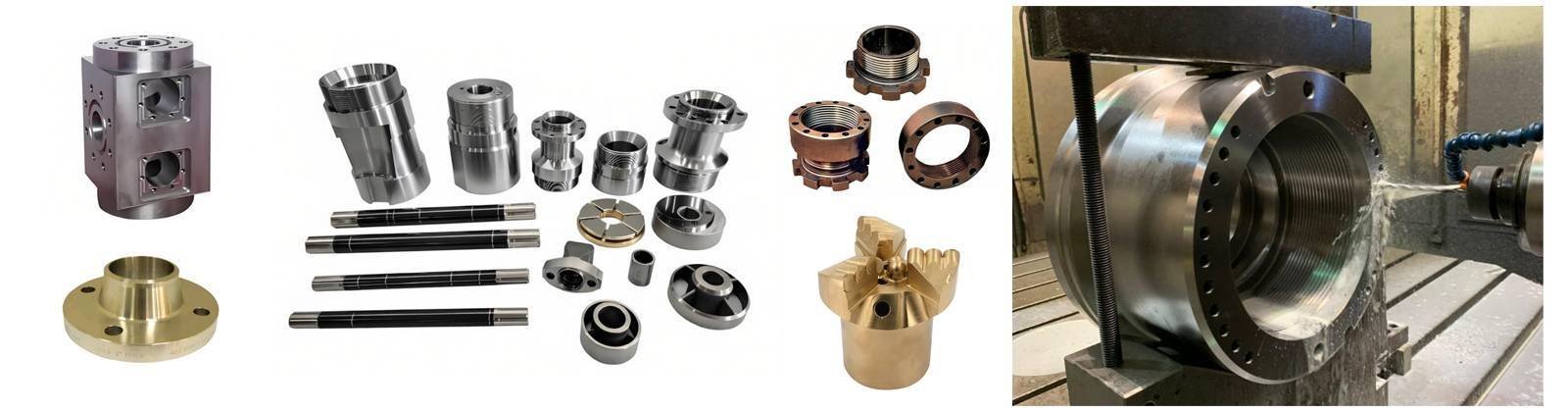
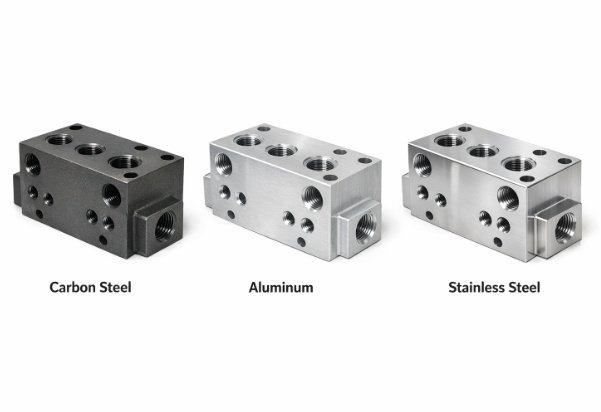
Material selection is a critical engineering decision in the design of manifold blocks for pneumatic, hydraulic, and vacuum systems. Among the most widely used materials—carbon steel, aluminum, and stainless steel—each offers distinct advantages in terms of strength, corrosion resistance, machinability, and lifecycle cost.
This article delivers a technically rigorous comparison aligned with real-world engineering constraints and search intent, helping designers, OEMs, and procurement teams choose the optimal material for manifold block applications.
What Is a Manifold Block?
A manifold block is a machined component that distributes fluids (air, oil, or vacuum) from a single source to multiple channels. It replaces complex tubing assemblies, reducing leak points and improving system compactness.
Common Applications
- Hydraulic power units
- Pneumatic automation systems
- Vacuum handling systems
- Oil and gas control panels
Material Overview
1. Carbon Steel Manifold Blocks
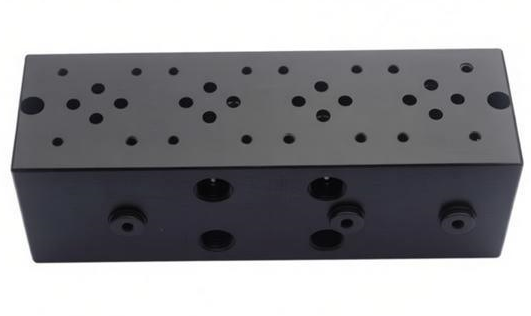
Carbon steel is widely used in hydraulic systems where high strength and cost efficiency are required.
Key Properties
- Tensile strength: 400–700 MPa
- Moderate corrosion resistance (requires coating)
- High pressure tolerance (>350 bar typical)
Advantages
- Excellent mechanical strength
- Lower raw material cost than stainless steel
- Suitable for high-pressure hydraulic circuits
Limitations
- Susceptible to corrosion without surface treatment (e.g., zinc plating, black oxide)
- Heavier than aluminum
- Requires maintenance in humid or corrosive environments
2. Aluminum Manifold Blocks
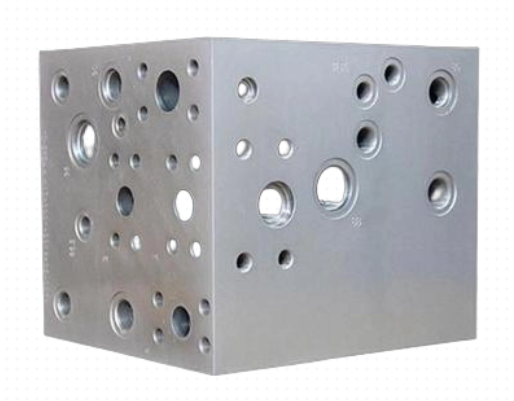
Aluminum is preferred in pneumatic and lightweight systems due to its machinability and weight advantages.
Key Properties
- Tensile strength: 150–300 MPa (varies by alloy, e.g., 6061-T6)
- Density: ~2.7 g/cm³ (≈1/3 of steel)
- Good natural corrosion resistance
Advantages
- Lightweight → ideal for robotics and mobile systems
- Excellent machinability → lower production cost
- Good thermal conductivity → reduces heat buildup
Limitations
- Lower pressure resistance (typically <200 bar)
- Softer material → prone to thread wear and deformation
- Not ideal for highly abrasive or high-load environments
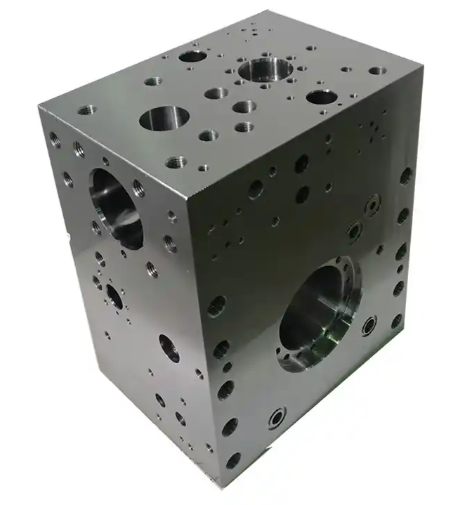
3. Stainless Steel Manifold Blocks
Stainless steel is used in environments requiring high corrosion resistance and cleanliness.
Key Properties
- Tensile strength: 500–800 MPa
- Excellent corrosion resistance (e.g., 304, 316 grades)
- High chemical resistance
Advantages
- Excellent corrosion resistance in harsh environments
- Suitable for chemical, marine, and food-grade applications
- High durability and long service life
Limitations
- Higher material and machining cost (typically 2–3× aluminum)
- Lower machinability → longer production cycles
- Heavier than aluminum
Direct Comparison
| Parameter | Carbon Steel | Aluminum | Stainless Steel |
|---|---|---|---|
| Strength | High | Medium | High |
| Weight | Heavy | Very light | Heavy |
| Corrosion Resistance | Low (needs coating) | Moderate | Excellent |
| Cost | Low–Medium | Low | High |
| Machinability | Moderate | Excellent | Difficult |
| Pressure Capability | Very high | Medium | High |
| Typical Use | Hydraulics | Pneumatics | Corrosive environments |
Engineering Design Considerations
1. Pressure and Load Requirements
- Hydraulic systems (>250 bar): Carbon steel or stainless steel preferred
- Pneumatic systems (<10 bar): Aluminum is typically sufficient
Failure Insight:
Using aluminum in a 300 bar hydraulic system can lead to micro-cracking and thread deformation within <6 months under cyclic loading.
2. Corrosion and Environmental Exposure
- Outdoor or marine → stainless steel (316)
- Indoor dry environments → aluminum or coated carbon steel
Data Point:
Uncoated carbon steel exposed to 85% humidity can show surface oxidation within 48–72 hours.
3. Weight Constraints
In robotic systems or aerospace applications:
- Replacing steel with aluminum can reduce component weight by 60–70%
- Leads to energy savings of 10–15% in motion systems
4. Machining Complexity and Cost
- Aluminum reduces machining time by 30–50%
- Stainless steel increases tool wear → higher tooling cost
5. Sealing and Surface Finish
- Aluminum: easier to achieve fine surface finish (Ra < 1.6 µm)
- Stainless steel: better for long-term sealing integrity in corrosive fluids
Real Engineering Case Study
Hydraulic Control System Upgrade
Scenario:
An OEM used aluminum manifold blocks in a compact hydraulic unit (280 bar operating pressure).
Problem
- Thread fatigue and internal deformation after ~500,000 cycles
- Leakage observed at valve interfaces
Root Cause
- Aluminum yield strength insufficient for cyclic high الضغط conditions
- Thermal expansion mismatch affecting sealing
Solution
- Switched to carbon steel manifold with zinc-nickel coating
Results
- Service life increased by 3.2×
- Leakage incidents reduced by >90%
- Maintenance interval extended from 6 months to 18 months
Application-Based Material Selection
Choose Carbon Steel When:
- High pressure hydraulic systems
- Cost-sensitive industrial applications
- Structural strength is critical
Choose Aluminum When:
- Lightweight design is required
- Pneumatic or low-pressure systems
- High production volume (cost efficiency)
Choose Stainless Steel When:
- Corrosive or sanitary environments
- Chemical processing or food equipment
- Long lifecycle and low maintenance are priorities
Hybrid and Advanced Approaches
Modern systems increasingly use hybrid strategies:
- Aluminum manifold body + stainless steel thread inserts
- Carbon steel core with corrosion-resistant coatings
These approaches balance:
- Cost
- Performance
- Durability
Conclusion
The choice between carbon steel, aluminum, and stainless steel in manifold blocks is not merely a material decision—it is a system-level optimization problem involving pressure, environment, cost, and lifecycle performance.
- Carbon steel excels in high-pressure durability and cost efficiency
- Aluminum leads in lightweight design and manufacturability
- Stainless steel dominates in corrosion resistance and longevity
Selecting the right material based on application-specific constraints can significantly improve system reliability, reduce maintenance costs, and enhance overall operational efficiency.
