
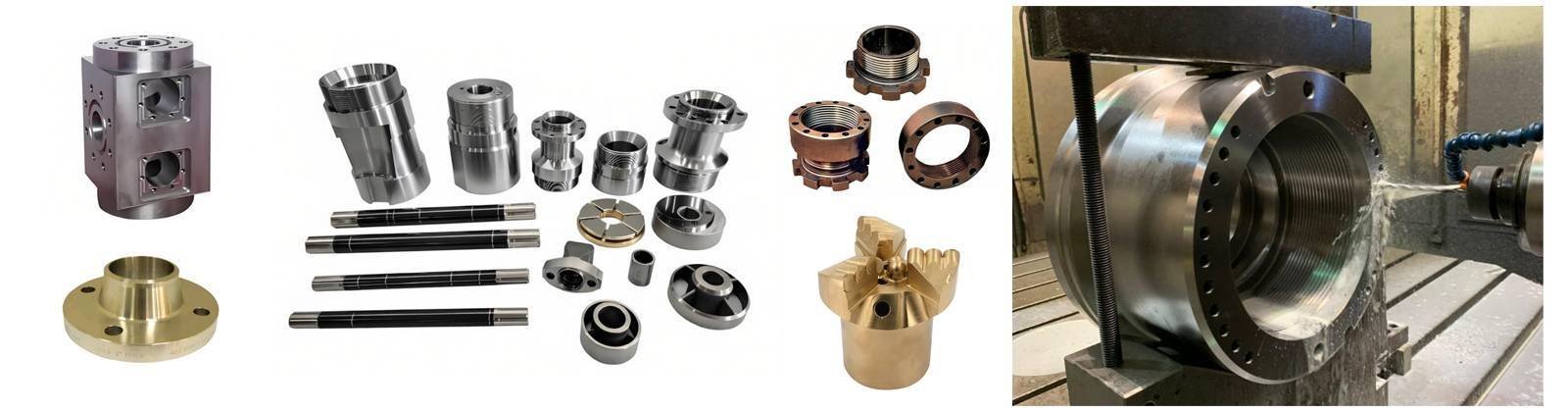
Precision Machining for Fluid and Air Distribution Connections
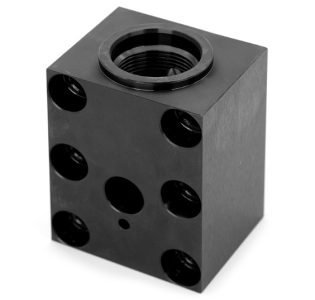
Junction blocks are used to connect, distribute, or redirect fluid, air, or hydraulic lines within a system. By integrating multiple ports into a single compact component, they help simplify system layouts, reduce connection points, and improve overall reliability.
We provide custom CNC machining services for junction blocks, focusing on accurate port positioning, reliable sealing, and clean internal flow paths for stable system performance.
Designed for Reliable Multi-Port Connections
Junction blocks often include multiple threaded ports, intersecting channels, and compact geometries. Poor machining can lead to leakage, misalignment, or installation difficulties.
Our machining approach ensures:
- Precise port alignment for easy installation
- Smooth internal passages for consistent flow
- Reliable sealing interfaces to prevent leakage
- Structural integrity for pressure resistance
- Compliance with API, ASME, and ANSI Standards
This enables efficient integration into a wide range of systems. Our machined junction blocks are manufactured in accordance with internationally recognized standards such as API, ASME, and ANSI to ensure reliability, safety, and compatibility in demanding industrial applications. By aligning with these standards, we ensure that each component meets strict requirements for pressure handling, dimensional accuracy, and connection integrity.
This standards-based approach guarantees that our junction blocks can be seamlessly integrated into existing systems, particularly in oil and gas, hydraulic, and process control environments. It also supports consistent quality, traceability, and compliance with project specifications, helping reduce approval time and ensuring dependable long-term performance in critical operations.
Material Selection for Junction Block
Material choice depends on system pressure, environmental conditions, and media type.
| Material | Key Properties | Typical Applications | Advantages | Considerations |
|---|---|---|---|---|
| Aluminum 6061 | Lightweight, good machinability | Pneumatic and general systems | Cost-effective, fast production | Lower strength |
| Aluminum 7075 | High strength, lightweight | Compact high-pressure systems | Stronger than 6061 | Higher cost |
| Stainless Steel 304 | Corrosion resistant | Industrial environments | Durable | Higher machining cost |
| Stainless Steel 316 | Superior corrosion resistance | Oil & gas, marine environments | Excellent durability | Expensive |
| Brass | Good machinability, sealing performance | Low-pressure systems | Smooth threading | Lower strength |
| Carbon Steel | High strength | Hydraulic systems | Durable, cost-effective | Requires coating |
Material selection is guided by pressure requirements, corrosion exposure, and cost considerations.
Machining Capabilities for Junction Block
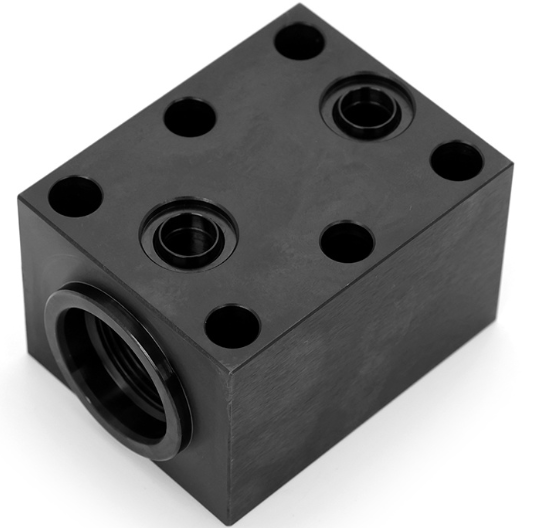
Junction blocks require precise machining of multiple ports and internal connections to ensure proper system function.
We support:
- Multi-axis CNC machining for complex geometries
- Precision drilling and cross drilling for internal channels
- Accurate threading (NPT, BSPP, BSPT)
- Tight tolerance control for sealing surfaces
- Internal deburring and cleaning for contamination-free flow
We ensure all internal channels are properly aligned and free of obstructions before delivery.
Typical Applications of Junction Blocks
Junction block is widely used in systems that require efficient connection and distribution of media.
- Hydraulic Systems
Used to connect multiple hydraulic lines and simplify system layouts. - Pneumatic Systems
Distribute compressed air across different components. - Oil and Gas Industry
Used in control systems and fluid distribution under high-pressure conditions. - Industrial Automation
Supports compact and efficient equipment design. - Instrumentation and Control Systems
Provides organized and reliable connection points.
Common Issues in Junction Block Machining Services
Junction block machining involves several critical challenges that impact performance and reliability.
- Port Misalignment and Assembly Difficulty
Ensured through precise positioning and machining accuracy. - Leakage from Poor Thread Quality or Sealing Surfaces
Controlled through strict machining standards and inspection. - Internal Burrs and Flow Contamination
Eliminated through thorough deburring and cleaning processes. - Flow Restriction from Poor Channel Design Execution
Addressed through accurate drilling and smooth internal finishing. - Structural Weakness in Compact Designs
Maintained through careful control of wall thickness and machining paths.
Why Choose Us for Junction Block Machining Services
We understand the importance of connection reliability and system integration.
- Expertise in multi-port precision machining
- Strong control over threading and sealing performance
- Capability to machine various materials for different environments
- Consistent quality from prototype to production
- Engineering support for layout and manufacturability optimization
Result: Reliable Connections and Efficient System Integration
By combining precise machining, proper material selection, and strict quality control, we deliver junction blocks that ensure secure connections, consistent flow, and long-term reliability.
This helps reduce leakage risks, simplify system design, and improve overall operational efficiency.
