
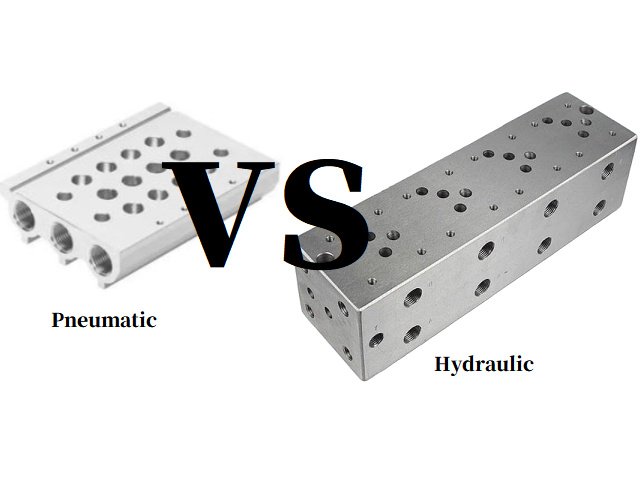
Pneumatic manifold blocks are ideal for clean, fast, and low-force applications, while hydraulic manifold blocks are better suited for high-pressure, high-load systems requiring precise control and power density. Selecting the right system depends on pressure requirements, load characteristics, environmental conditions, and operational efficiency goals.
Introduction
In industrial fluid power systems, choosing between a pneumatic manifold block and a hydraulic manifold block is a critical engineering decision. Both serve as centralized distribution units for controlling fluid flow, but they differ significantly in performance, efficiency, and application scope.
This comparison is particularly relevant in regions such as North America manufacturing, Middle East oil & gas operations, and Asia-Pacific automation industries, where system efficiency and reliability directly impact operational costs.
What Is a Manifold Block?
A manifold block is a machined component that distributes fluid (air or oil) to multiple valves and actuators within a system. It simplifies piping, reduces leakage points, and improves system compactness.
- Pneumatic manifold block → distributes compressed air
- Hydraulic manifold block → distributes pressurized hydraulic fluid
Pneumatic vs Hydraulic Manifold Block: Core Differences
| Feature | Pneumatic Manifold Block | Hydraulic Manifold Block |
|---|---|---|
| Medium | Compressed air | Hydraulic oil |
| Pressure Range | Low (typically 5–10 bar) | High (up to 350+ bar) |
| Force Output | Low to moderate | Very high |
| Speed | Fast response | Moderate |
| Precision | Lower | Higher |
| System Complexity | Simple | Complex |
| Maintenance | Low | Moderate to high |
| Leakage Impact | Minimal | Critical |
Performance and Efficiency Considerations
Pneumatic Systems
Pneumatic manifold systems are widely used in industrial automation due to:
- Fast actuation speeds
- Clean operation (no oil contamination)
- Lower initial cost
However, compressed air systems suffer from energy inefficiency, with losses often exceeding 20–30% due to air compression and leakage.
Hydraulic Systems
Hydraulic manifold blocks excel in:
- High torque and force output
- Stable performance under heavy loads
- Precise control in demanding environments
They are commonly used in oil & gas, heavy machinery, and offshore platforms, especially in regions like the Middle East, where high-temperature and high-load conditions require robust systems.
Application Scenarios
When to Use Pneumatic Manifold Blocks
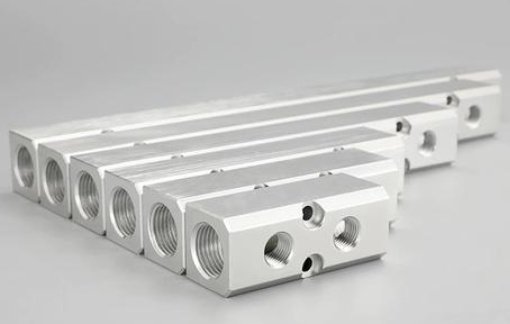
Best suited for:
- Assembly lines in manufacturing hubs
- Packaging and material handling systems
- Light-duty automation requiring rapid cycling
When to Use Hydraulic Manifold Blocks
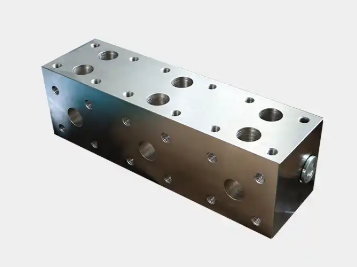
Recommended for:
- Oilfield equipment in oil & gas industry
- Heavy-duty presses and construction machinery
- Offshore drilling and subsea systems
Real Engineering Scenario
In a manufacturing facility, a pneumatic manifold system was initially used for actuator control in a high-load pressing application.
Problem
- Insufficient force output
- Inconsistent positioning accuracy
- Increased cycle time due to repeated adjustments
Solution
The system was upgraded to a hydraulic manifold block:
- Pressure increased from 8 bar (pneumatic) to 210 bar (hydraulic)
- Force output improved by over 300%
- Cycle stability significantly enhanced
Result
- Production efficiency increased by approximately 25%
- Reduced mechanical wear due to smoother operation
Decision Factors: How to Choose
1. Load Requirements
- Low force → Pneumatic
- High force → Hydraulic
2. Precision and Control
- Basic control → Pneumatic
- High precision → Hydraulic
3. Energy Efficiency
- Short-cycle, low-load → Pneumatic acceptable
- Continuous heavy-duty → Hydraulic more efficient overall
4. Environment
- Clean, indoor → Pneumatic
- Harsh, high-load, outdoor → Hydraulic
Technical Terminology
This comparison involves key fluid power concepts:
- Fluid power systems
- Pressure control and flow regulation
- Valve integration and manifold design
- High torque low speed (HTLS) systems
- Industrial automation vs heavy-duty hydraulics
Understanding these terms is essential for proper system design and optimization.
Geographic Considerations
- North America: High adoption of hydraulic systems in oil & gas and heavy equipment
- Middle East: Preference for hydraulic oil & gas solutions due to extreme operating conditions
- Asia-Pacific: Strong use of pneumatic systems in high-speed manufacturing and automation
These regional trends influence system selection based on operational priorities and environmental constraints.
Conclusion
The choice between a pneumatic manifold block and a hydraulic manifold block ultimately depends on application requirements.
- Pneumatic systems offer speed, simplicity, and cleanliness
- Hydraulic systems provide power, precision, and durability
For engineers and decision-makers, the optimal solution lies in aligning system capabilities with load demands, efficiency targets, and operating environments.
Final Insight
While pneumatic manifold blocks dominate in automation and light-duty applications, hydraulic manifold blocks remain the preferred choice for high-pressure, high-performance systems where efficiency and force output are critical.
