
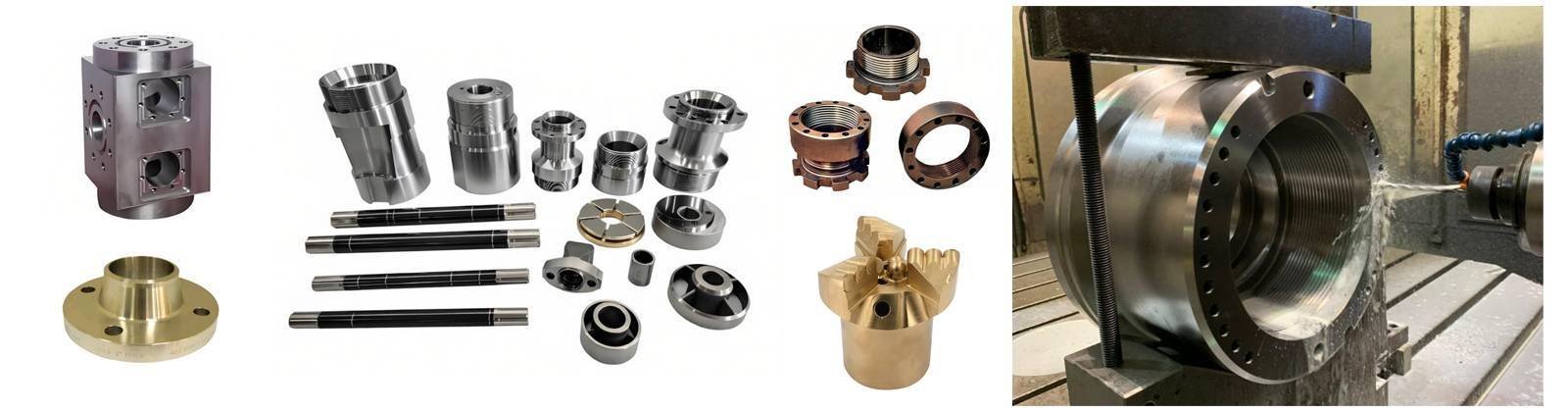
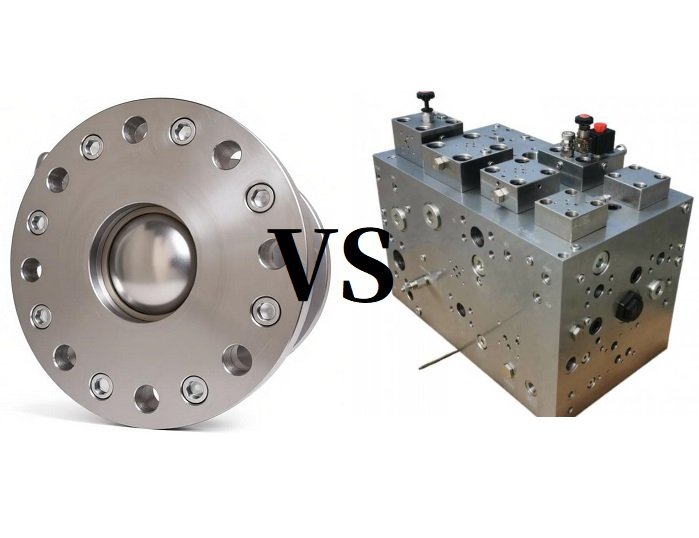
When designing hydraulic or pneumatic systems, engineers and procurement teams often face a critical choice: valve body vs manifold block. While both components are essential for fluid control, they serve different structural and functional roles. Understanding their differences is crucial for optimizing system performance, cost efficiency, and maintenance.
This guide provides a comprehensive comparison to help you make an informed purchasing decision.
What Is a Valve Body?
A valve body is the primary pressure-containing structure of a valve. It houses internal components such as trim, seats, and seals, and directly regulates fluid flow.
Instead of listing fragmented points, it’s more useful to understand valve bodies as function-centric components. They are designed to actively control parameters like flow rate, pressure, and direction within a system. Because of this, they integrate moving parts and sealing mechanisms, which makes them highly precise but also subject to wear.
In practical terms, valve bodies are widely used across industries such as oil & gas, chemical processing, and water treatment, where real-time control of fluid behavior is critical.
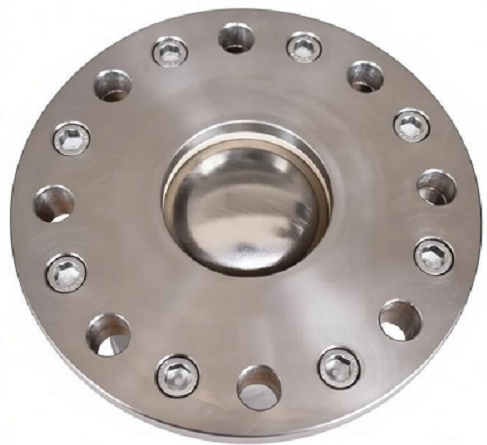
Key Characteristics:
- Function-focused: Controls flow, pressure, and direction
- Integrated design: Contains internal moving parts
- Material options: Stainless steel, brass, cast iron, alloys
- Used in: Ball valves, gate valves, globe valves, control valves
Typical Applications:
- Oil & gas pipelines
- Chemical processing systems
- Water treatment plants
- Industrial automation
What Is a Manifold Block?
A manifold block is a solid block (usually metal) with multiple internal channels designed to distribute fluid between components.
Rather than acting as a control element, a manifold block should be understood as a system integration platform. It consolidates multiple flow paths into a single structure, allowing engineers to mount several valves and create a compact, highly organized hydraulic or pneumatic system.
This design reduces external piping, minimizes leakage risks, and improves assembly efficiency. In modern manufacturing, manifold blocks are often custom-machined to match specific system requirements, making them especially valuable in OEM applications.
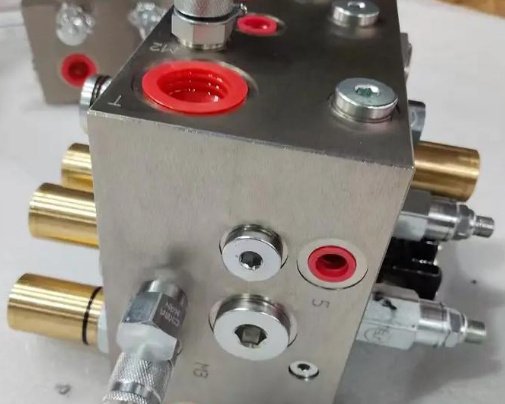
Key Characteristics:
- Distribution-focused: Routes fluid to multiple valves or actuators
- Customizable: Machined with specific port configurations
- Compact design: Reduces piping and leak points
- Modular integration: Supports multiple valves in one assembly
Typical Applications:
- Hydraulic power units
- Pneumatic control systems
- Automotive braking systems
- Aerospace hydraulic circuits
Valve Body vs Manifold Block: Core Differences
| Feature | Valve Body | Manifold Block |
|---|---|---|
| Primary Role | Flow control | Fluid distribution |
| Internal Mechanism | Contains moving parts | Typically no moving parts |
| Design Complexity | High (precision components) | Medium (machined channels) |
| Customization | Limited to valve type | Highly customizable |
| Installation | Standalone component | Integrated system base |
| Maintenance | Requires servicing of internals | Easier, fewer wear parts |
Advantages and Disadvantages
Valve Body Pros:
- Precise control over flow and pressure
- Wide range of valve types and configurations
- Suitable for high-pressure applications
Valve Body Cons:
- More maintenance required
- Higher failure risk due to moving parts
Manifold Block Pros:
- Reduces system complexity and footprint
- Minimizes leakage points
- Improves assembly efficiency
Manifold Block Cons:
- Requires custom design and machining
- Less flexibility after manufacturing
How to Choose: Decision Framework
When deciding between a valve body and a manifold block, consider the following factors:
1. System Function
- Need to control flow precisely → Choose a valve body
- Need to distribute flow efficiently → Choose a manifold block
2. Space Constraints
- Limited installation space → Manifold block is more compact
3. Maintenance Strategy
- Frequent servicing required → Simpler manifold systems reduce downtime
4. Cost Considerations
- Small systems → Valve bodies may be more economical
- Large, complex systems → Manifolds reduce long-term costs
5. Customization Needs
- Highly specific routing or integration → Manifold block preferred
Three Application Cases of Decision-Making
Case 1: Injection Molding Machine (OEM Scenario)
A plastic injection molding manufacturer initially used multiple standalone valve bodies connected via piping. While the system worked, it resulted in:
- Complex installation
- High leakage risk
- Longer assembly time
After switching to a custom manifold block with integrated valve mounting, the company achieved:
- ~30% reduction in assembly time
- Significant decrease in leakage points
- More compact machine design
👉 Decision insight: For OEMs and batch production, manifold blocks improve scalability and consistency.
Case 2: Small Hydraulic Test Bench
A laboratory setup required flexible control over pressure and flow for different experiments. Engineers chose individual valve bodies instead of a manifold system.
This allowed:
- Easy component replacement
- Rapid configuration changes
- Lower upfront cost
👉 Decision insight: For low-volume, flexible systems, valve bodies provide better adaptability.
Case 3: Construction Equipment (Excavator Hydraulic System)
In mobile machinery, space and reliability are critical. A manufacturer redesigned its hydraulic system using a manifold block to integrate multiple control valves.
Results included:
- Reduced hose usage
- Improved vibration resistance
- Lower maintenance frequency
👉 Decision insight: In harsh environments, fewer connections = higher reliability.
Can They Be Used Together?
Yes—valve bodies and manifold blocks are often used together in advanced systems.
For example:
- A hydraulic manifold block distributes fluid
- Multiple valve bodies mounted on it control individual flow paths
This combination delivers both efficiency and precision, making it the industry standard in many applications.
Conclusion
The choice between a valve body and a manifold block is not about which is better—it’s about which fits your system requirements.
- Choose a valve body for precise control and regulation
- Choose a manifold block for compact, efficient fluid distribution
For most modern hydraulic and pneumatic systems, the optimal solution is often a hybrid approach, combining both components for maximum performance and cost-effectiveness.
Ready to Select the Right Solution?
If you're sourcing components:
- Define your pressure, flow, and integration requirements
- Consult with a manufacturer for custom manifold design
- Evaluate lifecycle cost—not just initial price
A well-informed choice can significantly improve system reliability and ROI.
