
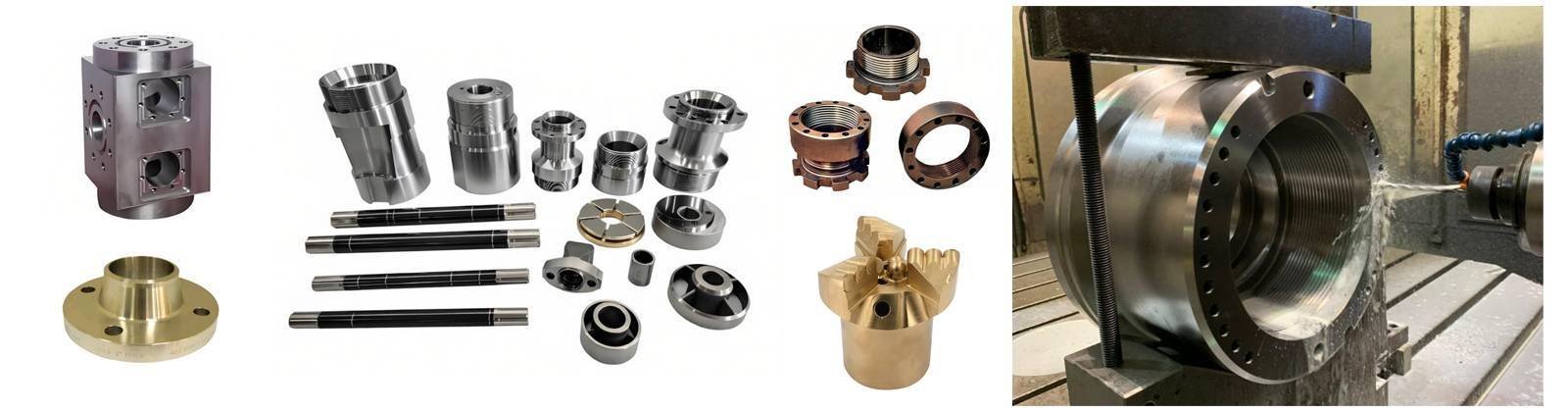
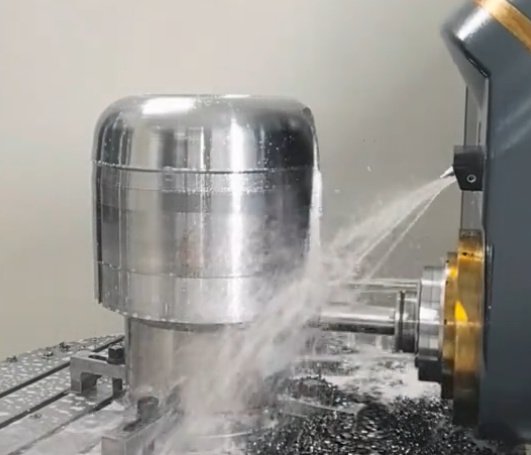
Wellhead precision machining refers to the advanced CNC manufacturing processes used to produce critical components for wellhead assemblies and Christmas tree equipment that control oil and gas flow from reservoirs. These components—including casing heads, tubing heads, valve bodies, hangers, and flanges—must withstand extreme pressures, corrosive environments, and high temperatures while maintaining absolute sealing integrity .
The machining of wellhead equipment is governed by stringent industry standards, primarily API Specification 6A, which defines requirements for wellhead and Christmas tree equipment used in petroleum and natural gas industries . Precision machining ensures these components meet exacting dimensional tolerances, surface finish requirements, and material specifications necessary for safe operation in hostile downhole environments.
API 6A Standards and Product Specification Levels (PSL)
API 6A Compliance Framework
API Specification 6A establishes comprehensive requirements for the performance, dimensional interchangeability, design, materials, testing, inspection, and documentation of wellhead equipment . The standard covers:
- Wellhead equipment: Casing-head housings, casing-head spools, tubing-head spools, cross-over spools
- Connectors and fittings: Cross-over connectors, tubing-head adapters, tees and crosses
- Valves and chokes: Single valves, multiple valves, actuated valves, check valves, chokes
- Casing and tubing hangers: Mandrel hangers, slip hangers
- Other equipment: Actuators, clamp hubs, pressure boundary penetrations, ring gaskets
Product Specification Levels (PSL)
API 6A defines four PSL tiers that determine the rigor of manufacturing and quality control:
| PSL Level | Key Requirements | Application |
|---|---|---|
| PSL 1 | Minimum requirements; basic inspection | Normal service conditions |
| PSL 2 | Additional impact and hardness testing | Moderate sour service |
| PSL 3 | Full volumetric ultrasonic examination (UT) | Critical offshore applications |
| PSL 4 | Highest quality level; comprehensive NDT, material traceability, and witnessed testing | Extreme HPHT and sour environments |
For primary wellhead components in demanding applications, PSL 3 or PSL 4 is typically required, mandating full material traceability, 100% ultrasonic testing, and witnessed inspection by third-party authorities .
Critical Machining Processes for Wellhead Components
CNC Turning and Milling
Wellhead components require multi-axis CNC machining centers to achieve complex geometries with tight tolerances. Key machining operations include:
- CNC Turning: Producing cylindrical components like pipes, shafts, and connectors with precision diameters
- Multi-axis CNC Milling: Manufacturing complex wellhead housings, manifold components, and valve bodies with internal cavities and porting
- Deep Hole Drilling & Boring: Creating long, precision-drilled oilfield components with straightness requirements
Advanced facilities utilize 5-axis machining centers with table loading capacities up to 55,000 lbs, enabling complete machining of large wellhead components in single setups to maintain geometric accuracy .
Surface Finish Requirements
Surface finish is critical for sealing surfaces in wellhead equipment. API 6A mandates surface finishes of 0.8 µm Ra (32 µin RMS) on BX ring gasket surfaces to maintain sealing integrity under extreme pressure .
| Surface Finish | Ra (µm) | Ra (µin) | Typical Application |
|---|---|---|---|
| Standard machined | 3.2 | 125 | General structural surfaces |
| Precision machined | 1.6 | 63 | Bearing fits, static seals |
| Fine ground/sealed | 0.8 | 32 | API 6A ring gasket surfaces |
| Super-finished | 0.4 | 16 | Dynamic seals, high-fatigue areas |
Achieving Ra 0.8 µm requires optimized CNC parameters: high spindle speeds, light depths of cut, sharp carbide inserts, and high-pressure coolant delivery to prevent built-up edge formation . The cost multiplier for Ra 0.8 µm surfaces typically ranges from 2.5x to 4.0x baseline machining costs, while Ra 0.4 µm can increase costs by 5.0x to 8.0x due to secondary grinding operations .
Thread Machining
Wellhead components feature precision threads for API connections, including:
- API round threads for casing and tubing connections
- API buttress threads for high-torque applications
- Premium gas-tight threads for HPHT service
Thread machining requires ±0.005-inch tolerance control to ensure pressure integrity and prevent galling during make-up .
Material Selection and Machinability Challenges
Standard Wellhead Materials
Wellhead components are manufactured from high-strength alloy steels selected based on service conditions:
| Material Class | Material Grade | Service Environment |
|---|---|---|
| AA | Carbon/low alloy steel | Non-corrosive conditions |
| BB | Carbon/low alloy steel | Slightly corrosive |
| CC/DD | Stainless steel | CO₂ and H₂S environments |
| EE | High alloy steel | Highly corrosive |
| FF/HH | Inconel, duplex stainless | Extreme HPHT and sour service |
Common materials include AISI 4130, 4140, and 410 stainless steel, with Inconel 718 and 625 reserved for the most severe conditions .
Inconel 718 Machining Challenges
Inconel 718 is widely used for wellhead components in HPHT and sour service due to its exceptional corrosion resistance and strength retention at elevated temperatures . However, it presents significant machining difficulties:
Machinability Characteristics:
- Machinability rating: Only ~12% compared to AISI 1112 carbon steel (100%), making it nearly 8 times more difficult to cut
- Work hardening: The γ'' phase precipitates instantly during cutting, creating a hardened layer that accelerates tool wear
- Low thermal conductivity: Approximately 11.4 W/m·K at room temperature—roughly 5% that of copper—causing heat concentration at the cutting edge
- Abrasive microstructure: Hard carbide and nitride particles damage cutting tool coatings
Recommended Cutting Parameters for Inconel 718:
| Operation | Tool Type | Cutting Speed (m/min) | Feed Rate (mm/rev) | Depth of Cut (mm) |
|---|---|---|---|---|
| Rough Turning | Carbide (TiAlN coated) | 20–40 | 0.2–0.4 | 1.5–3.0 |
| Finish Turning | Carbide (PVD coated) | 10–25 | 0.05–0.2 | 0.2–1.0 |
| Milling | Carbide | 25–40 | 0.1–0.25 | 0.5–2.0 |
Tool Life Reality: Inconel 718 limits tool life to 20–40 minutes of actual cutting time under standard parameters . High-pressure coolant delivery at 70–100 bar (1,000–1,500 psi) is essential to manage heat and break chips effectively .
HPHT Manufacturing Challenges (15,000+ PSI)
Defining HPHT Conditions
The U.S. Bureau of Safety and Environmental Enforcement (BSEE) defines High-Pressure, High-Temperature (HPHT) conditions as:
- High Pressure: Internal absolute pressure rating greater than 15,000 psia at the wellhead
- High Temperature: Temperature rating greater than 350°F (177°C)
Engineering and Manufacturing Implications
HPHT conditions create unique challenges for wellhead component manufacturing:
- Material Degradation: Elevated temperatures reduce material strength and toughness, requiring careful heat treatment control and material qualification
- Thicker Wall Sections: HPHT burst sizing requirements demand thicker pipe walls, leading to challenges in:
- Pipe fabrication and welding
- Inspection accessibility
- Weight management for subsea equipment
- Sealing Surface Integrity: Metal-to-metal seals must maintain integrity across thermal cycles. Surface finishes must achieve Ra 0.4–0.8 µm with minimal waviness to prevent leakage under 15,000+ psi differential
- Testing Limitations: Conventional testing equipment often cannot replicate HPHT conditions simultaneously. Specialized test facilities must generate 15,000 psi pressure at 350°F for validation
- Regulatory Gap: Current API standards do not fully address subsea equipment for pressures exceeding 15,000 psi, requiring case-by-case technology qualification through HAZID/HAZOP/FMECA studies, design verification, and validation testing
Case Study: 15,000 PSI HPHT System Deployment
A Middle East operator required a 15,000 psi-rated multistage completion system with 350°F working temperature for tight reservoir stimulation. The engineering solution involved:
- Integrated system design from liner top to toe to eliminate multi-vendor compatibility risks
- ZXtreme™ HP/HT liner top packer with metal seal technology
- ControlSET™ FLEX-LOCK™ V liner hanger enabling rotation and wash-down during deployment
- Elimination of additional reamer runs, reducing installation time and operational complexity
This case demonstrates that HPHT wellhead machining requires system-level thinking where component precision directly impacts field assembly efficiency and seal reliability.
Quality Assurance and Non-Destructive Testing (NDT)
Mandatory Inspection Protocols
API 6A PSL requirements mandate comprehensive quality control:
| Inspection Type | PSL 1 | PSL 2 | PSL 3 | PSL 4 |
|---|---|---|---|---|
| Dimensional inspection | ✓ | ✓ | ✓ | ✓ |
| Hardness testing | ✓ | ✓ | ✓ | ✓ |
| UT (Ultrasonic Testing) | — | — | 100% volumetric | 100% + witnessed |
| MT/PT (Magnetic Particle/Liquid Penetrant) | — | ✓ | ✓ | ✓ |
| RT (Radiographic Testing) | — | — | ✓ | ✓ |
| Material traceability | Batch | Heat | Individual | Individual + witnessed |
Surface Integrity Verification
Surface roughness measurement uses contact profilometers or optical interferometers to verify Ra and Rz values. For sealing surfaces, Rz (ten-point height) is particularly critical as it assesses the peak-to-valley profile that directly impacts gasket compression and seal formation .
Machining Tolerances and Geometric Dimensioning
Wellhead components require tight geometric control:
| Feature | Typical Tolerance | Criticality |
|---|---|---|
| Sealing diameters | ±0.0005" (±0.0127 mm) | Prevents leakage at pressure boundaries |
| Flange bolt circles | ±0.005" (±0.127 mm) | Ensures gasket compression uniformity |
| Thread pitch diameters | ±0.003" (±0.076 mm) | Maintains pressure integrity in connections |
| Bore concentricity | 0.001" TIR (0.025 mm) | Prevents eccentric loading on seals |
| Surface flatness | 0.0002" per inch | Critical for metal-to-metal seals |
Advanced Manufacturing Technologies
Multi-Axis and Mill-Turn Machining
Modern wellhead manufacturing utilizes mill-turn machines that combine milling and turning operations in a single setup. This approach:
- Reduces work-in-progress handling
- Maintains geometric relationships between turned and milled features
- Enables machining of complex components like tubing heads with integral flanges
Cryogenic and High-Pressure Coolant Systems
For Inconel and other superalloys, cryogenic cooling with liquid nitrogen can reduce cutting temperatures by nearly 12%, extending tool life and improving surface integrity . High-pressure coolant (1,000+ psi) directed precisely at the tool-chip interface is now standard for HPHT component machining .
Conclusion: The Critical Role of Precision in Wellhead Manufacturing
Wellhead precision machining represents the intersection of materials science, mechanical engineering, and quality assurance. The progression toward deeper, hotter, and higher-pressure reservoirs—exemplified by HPHT developments exceeding 15,000 psi and 350°F—continues to push manufacturing capabilities.
Key takeaways for engineers and procurement specialists:
- API 6A PSL 3/4 compliance is non-negotiable for critical applications
- Surface finish control (Ra 0.8 µm or better) directly determines sealing reliability
- Inconel 718 and superalloys require specialized machining strategies with conservative parameters and advanced coolant systems
- HPHT manufacturing demands system-level validation beyond standard API requirements
- 100% NDT coverage with material traceability ensures component integrity for life-of-field service
The technical evolution of wellhead precision machining continues to enable access to previously unreachable hydrocarbon resources, making it a cornerstone of modern oilfield engineering.
