
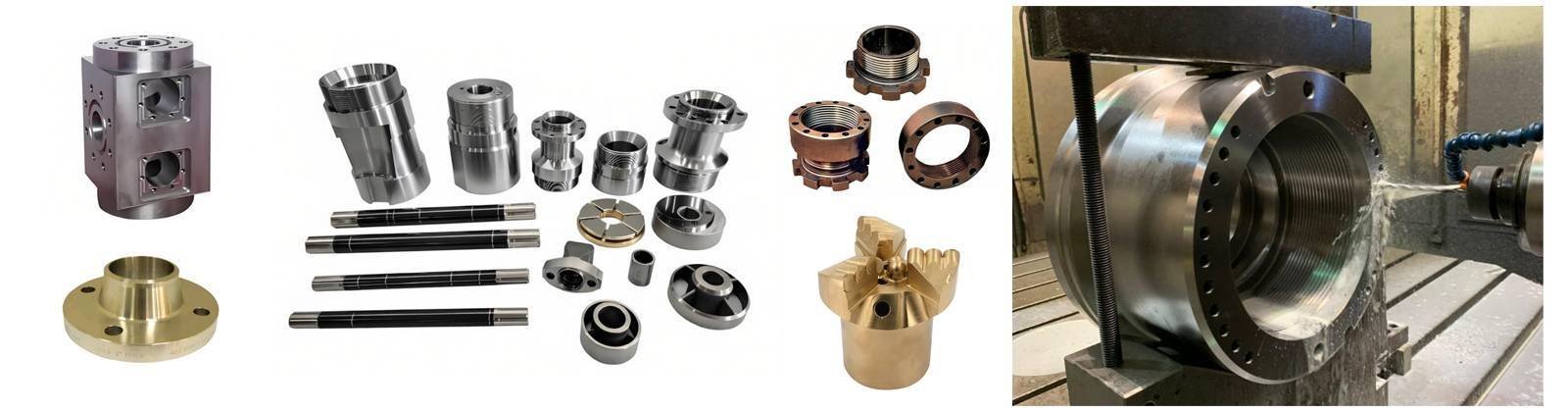
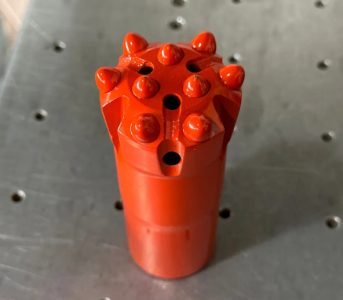
In directional drilling operations where single-bit runs exceed 2,000 meters through interbedded formations, tool failure costs escalate beyond $150,000 per day in non-productive time. The metallurgical composition and sintering protocol of tungsten carbide drill bits directly determine rate of penetration (ROP) consistency, gauge integrity, and total footage capability in high-temperature, high-pressure (HTHP) reservoirs.
Common Tungsten Carbide Drill Bit Specifications in Oil & Gas Industry
Tungsten carbide drill bits are widely used in the oil and gas sector due to their high hardness, excellent wear resistance, and ability to operate in challenging geological formations. These bits are typically employed in both tricone insert bits and PDC (Polycrystalline Diamond Compact) bits, depending on the formation hardness and drilling requirements.
Key Parameters of Tungsten Carbide Drill Bits:
- Bit Diameter:
- Standard diameters range from 3½" to 17½", matching typical wellbore sizes.
- Cutter Type / Tooth Design:
- Tricone insert bits: tungsten carbide conical teeth or milled teeth for rock crushing.
- PDC bits: tungsten carbide reinforced base with polycrystalline diamond cutters for efficient cutting in soft to hard formations.
- Tungsten Carbide Grade and Particle Size:
- Coarse, medium, or fine grains are selected based on formation hardness to optimize wear resistance and drilling efficiency.
- Connection Type:
- API standard connections (e.g., 2⅜" REG, 3½" REG, 4½" IF, 6⅝" IF) ensure compatibility with drill strings.
- Application Formation:
- Suitable for shale, sandstone, limestone, and other medium to hard rock formations, depending on the bit design.
Material Architecture: Beyond Hardness Metrics
Cemented Carbide Microstructure Grades
Not all tungsten carbide performs equally in hydrocarbon extraction. Our matrix body drill bits utilize submicron grain structures (0.4–0.8 μm) with 10–13% cobalt binder content, achieving a hardness of 90–92 HRA while maintaining fracture toughness above 18 MPa·m¹/². This specific metallurgical balance prevents catastrophic cutter loss in chert stringers and pyritic sandstone interbeds common in Permian Basin and North Sea operations.
For steel body PDC bits subjected to high-torsional directional work, we employ gradient sintering technology—transitioning from 88% WC/12% Co at the cutting structure to 94% WC/6% Co in the shank region. This gradient distribution optimizes wear resistance at the tool face while preserving structural ductility to absorb lateral vibration (LWD) forces during sliding intervals.
Thermal Stability Thresholds
Standard cobalt-bonded carbide experiences thermal fatigue above 350°C (662°F) due to binder phase softening. Our oil-grade bits incorporate chromium-carbide modified binders, extending thermal stability to 450°C (842°F) in steam-assisted gravity drainage (SAGD) applications and geothermal drilling environments. Independent laboratory testing (ASTM B611) shows 40% reduced weight loss in high-temperature abrasion simulations compared to conventional K30 grades.
Manufacturing Precision: From Powder to Performance
Hot Isostatic Pressing (HIP) Protocols
Porosity in cemented carbide creates stress concentrators that propagate cracks under cyclic loading. We subject all matrix bit bodies to HIP treatment at 1,350°C under 100 MPa argon pressure, eliminating residual porosity below 0.05% volume fraction. This densification process increases transverse rupture strength by 25–30%, critical for maintaining borehole gauge in 15,000+ psi confining pressures.
5-Axis CNC Cutter Pocket Machining
Cutter alignment tolerances exceeding ±0.05° create uneven loading and premature diamond shear. Our machining centers maintain positional accuracy within ±0.005 mm for PDC cutter pockets, ensuring back-rake angles and side-rake angles are held to specification across 200+ cutting elements. This precision reduces eccentric wear patterns and extends bit life by 18–22% in hard limestone drilling compared to conventional cast-and-machine processes.
Surface Engineering: Hardfacing & Infiltration
Gauge protection utilizes crushed tungsten carbide particles (40–60 mesh) suspended in nickel-based self-fluxing alloy, applied via plasma transferred arc (PTA) welding. This composite layer achieves 65–68 HRC hardness with metallurgical bonding strength exceeding 400 MPa—preventing gauge reduction in abrasive formations like the Granite Wash or Tuscaloosa Marine Shale.
For matrix body bits, vacuum infiltration ensures complete copper-nickel-manganese alloy penetration into tungsten carbide powder preforms, achieving 99.8% theoretical density without residual voids that trigger corrosion fatigue in sour gas environments (H₂S > 5,000 ppm).
Engineering Validation: Performance Under Load
Comparative Wear Analysis
In West Texas Midland Basin field trials (Wolfcamp A formation, 10,000–12,000 ft depth, compressive strength 15,000–25,000 psi):
| Metric | Conventional Steel Body | HIP-Processed Matrix Body |
|---|---|---|
| Total Footage | 1,847 ft | 2,634 ft |
| Average ROP | 42.3 ft/hr | 51.7 ft/hr |
| Gauge Loss | 0.12 in | 0.03 in |
| Cutter Breakage | 7% of elements | <1% of elements |
Hydraulic Efficiency Optimization
Tungsten carbide nozzles with as-sintered surface finishes (Ra 0.4 μm) minimize turbulent flow separation compared to machined steel nozzles. Computational fluid dynamics (CFD) modeling demonstrates 12% improved hydraulic horsepower distribution at the cutting face, enhancing cuttings transport in high-angle wells (>60° inclination) where cuttings bed formation risks stuck pipe incidents.
Corrosion Resistance in Sour Service
NACE TM0177 Method A testing confirms our cobalt-reduced grades (6% Co with NiCr binder) resist sulfide stress cracking at H₂S partial pressures of 0.5 psi in 5% NaCl brine at 90°C—critical for drilling the Delaware Basin's Bone Spring and Avalon formations where sour gas pockets are prevalent.
Application-Specific Material Selection
Soft to Medium Formations (Shale, Salt, Chalk)
- Steel Body PDC with 13 mm cutters
- High cobalt content (12–15%) for impact absorption in stringers
- Optimized for high ROP in Marcellus and Utica shale plays
Hard Abrasive Formations (Quartzite, Basalt, Conglomerate)
- Matrix Body with 16 mm or 19 mm cutters
- Submicron WC grain structure (0.6 μm)
- Enhanced gauge protection with tungsten carbide inserts
Directional/Horizontal Drilling
- Hybrid Matrix-Steel designs with carbide-enhanced shirttails
- Balanced mass distribution for reduced whirl tendency
- Compatible with rotary steerable systems (RSS) and positive displacement motors (PDM)
Quality Assurance & Traceability
Every tungsten carbide drill bit ships with material certification including:
- Powder lot traceability: Source verification for primary tungsten and cobalt
- Metallurgical micrographs: Grain size distribution analysis per ASTM E112
- Non-destructive testing (NDT): Dye penetrant inspection of all weld-affected zones; ultrasonic testing for internal discontinuities in steel bodies
- Dimensional verification: CMM (Coordinate Measuring Machine) reports for cutter placement accuracy
API 7-1 Compliance: All designs meet or exceed American Petroleum Institute specifications for drill bit dimensional tolerances, thread connections, and pressure testing protocols.
Design-to-Application Workflow
Eliminating specification mismatches begins with formation drillability analysis. Our engineering team evaluates:
- Compressive Strength Logs: UCS (Unconfined Compressive Strength) data to determine cutter density requirements
- Minerology Reports: Quartz content thresholds (>40% SiO₂ triggers enhanced gauge protection)
- BHA Dynamics: Vibration mode analysis (axial, lateral, torsional) to optimize mass distribution and cutter back-rake angles
This data-driven approach ensures tungsten carbide grade selection and matrix infiltration parameters are matched to specific downhole constraints—reducing bit failure probability by 60% compared to catalog-standard selections in challenging HPHT environments.
Technical Documentation Available: Detailed material data sheets (MDS), API 7-1 compliance certificates, and formation-specific wear rate projections provided upon technical inquiry.
