
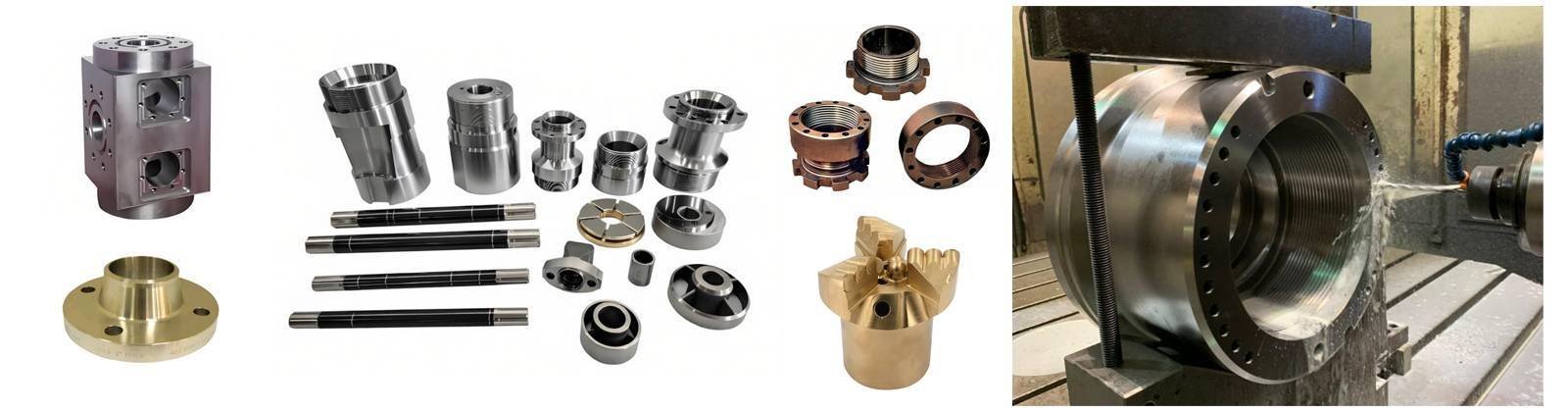
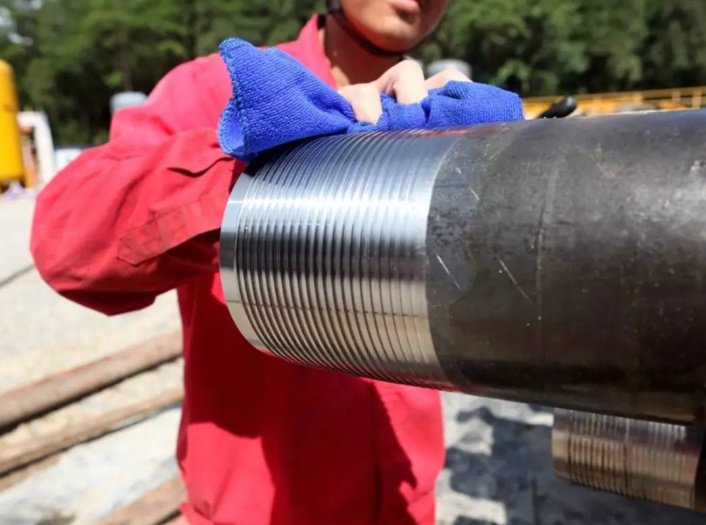
Field insights into drill collar engineering, bottom-hole assembly (BHA) optimization, drilling mechanics, and operational best practices for oil and gas drilling.
At 2:00 AM on a winter night in the Permian Basin, I watched our directional driller wrestle with erratic toolface readings. The gamma ray log showed the formation was right where we expected, yet the bottom-hole assembly (BHA) felt "spongy"—unresponsive to weight adjustments. The culprit wasn’t the mud motor or the MWD tool. It was the drill collar configuration: too few, too light, and positioned without regard for the neutral point of bending. That night cost us eight hours of non-productive time (NPT), but it cemented my understanding that drill collars are not merely "heavy pipe"—they are the dynamic backbone of drilling mechanics.
The Physics of Compression: Why Drill Collars Matter
Drill collars occupy the critical junction between the drill pipe and the bit, yet their engineering significance is often reduced to "providing weight on bit (WOB)." While true, this definition misses the mechanical nuance that separates efficient drilling from catastrophic failure.
In vertical and directional wells, the drill string operates under axial compression near the bit. Drill pipe, with its thin wall section (typically 0.25–0.5 inches), has a slenderness ratio that makes it susceptible to helical buckling under compressive loads exceeding its critical buckling force. Drill collars, with wall thicknesses ranging from 2.5 to 3.5 inches and outer diameters (OD) from 4 to 11 inches, possess a moment of inertia roughly 20–50 times greater than standard drill pipe. This stiffness allows them to sustain compressive loads while maintaining borehole trajectory.
According to API Spec 7-1, standard slick drill collars (non-spiral) provide maximum weight concentration, but they also create the highest differential sticking risk in permeable formations. This is where engineering trade-offs begin. In my experience, the decision between slick, spiral, or non-magnetic drill collars (for MWD/LWD compatibility) often determines whether you complete the section in one run or suffer a stuck-pipe incident.
Three Engineering Misconceptions I’ve Learned to Avoid
Myth 1: Maximum Weight Equals Maximum Efficiency
Early in my career, I believed loading the BHA with the heaviest available collars—often 9.5" OD in 12.25" holes—would maximize ROP (Rate of Penetration). The reality is more complex. The neutral point—where axial stress transitions from tension to compression—must remain within the drill collar section. If you overload the bit, the neutral point migrates into the heavy-weight drill pipe (HWDP) or even the drill pipe itself, inducing buckling and cyclical fatigue failures. I now calculate the required drill collar length using the Euler buckling formula modified for wellbore constraint, ensuring the neutral point stays at least 15% above the top drill collar under maximum anticipated WOB.
Myth 2: Stiffness Homogeneity Is Desirable
A uniform BHA with identical drill collars creates consistent vibration modes. In harder formations like the Wolfcamp or Bakken, this consistency translates to bit-bounce and lateral vibrations that destroy PDC cutters. I’ve found that introducing variable stiffness—alternating standard and spiral drill collars, or integrating flex collars—disrupts harmonic resonance. In one lateral section in the DJ Basin, replacing 30% of our standard collars with spiral variants reduced axial vibrations by 34% (measured via downhole vibration sensors), extending bit life by 40 hours.
Myth 3: Non-Magnetic Means "Magnetically Invisible"
Non-magnetic drill collars (Monel or stainless steel alloys) are essential for MWD directional surveys, but they are not passive tubes. Hot spots—localized magnetic permeability variations caused by mechanical damage or galvanic corrosion—can introduce azimuth errors of 2–3 degrees. During a high-temperature geothermal project in Nevada, we discovered that a "certified" non-magnetic collar had developed localized martensitic transformation from rough handling. The resulting magnetic interference caused a 15-meter lateral deviation before we identified the issue. Now, I insist on magnetic permeability testing (per API RP 7G) not just at procurement, but after every 500 rotating hours.
Specification Selection: A Practical Framework
When specifying drill collars for a new well, I prioritize this hierarchy:
- Mechanical Clearance: Ensure the OD provides adequate annular velocity for cuttings transport (typically >120 ft/min in the drill collar annulus) while minimizing contact forces in doglegs. I calculate the contact force index using the stiff string model rather than the soft string approximation in high-curvature sections.
- Material Grade: For sour service (H₂S > 0.05 psi partial pressure), specify low-sulfide stress cracking (SSC) resistant alloys. Standard 4145H mod steel fails at 22 HRC hardness in sour environments; I specify 120 ksi yield strength material with maximum 23 HRC through-thickness hardness.
- Connection Fatigue Resistance: In high-rotation, high-curvature applications, prioritize cold-rolled threads and balanced connection designs. The stress relief features in premium connections (like the XT or HT series) increase fatigue life by 3–4x in rotary steerable system (RSS) applications.
- Hydraulic Considerations: Remember that drill collars restrict flow area. For every 1" reduction in drill collar ID, annular pressure loss increases by approximately 15–20% in typical mud weights. In managed pressure drilling (MPD) scenarios, this pressure differential is critical for maintaining the pressure window.
Conclusion: The Systemic View
Drill collar optimization is not an isolated procurement decision; it is a systems engineering problem involving vibrations, hydraulics, directional control, and metallurgical integrity. The transition from viewing collars as "dumb weight" to understanding them as dynamic stability elements marks the difference between average and exceptional drilling performance.
As we move toward autonomous drilling systems, the drill collar will likely evolve from a passive mechanical component to an active sensor platform. Yet the fundamental physics remain: managing compression, preventing buckling, and transmitting energy efficiently from surface to bit. Master these principles, and you transform the heaviest section of your drill string from a liability into a precision instrument.
