
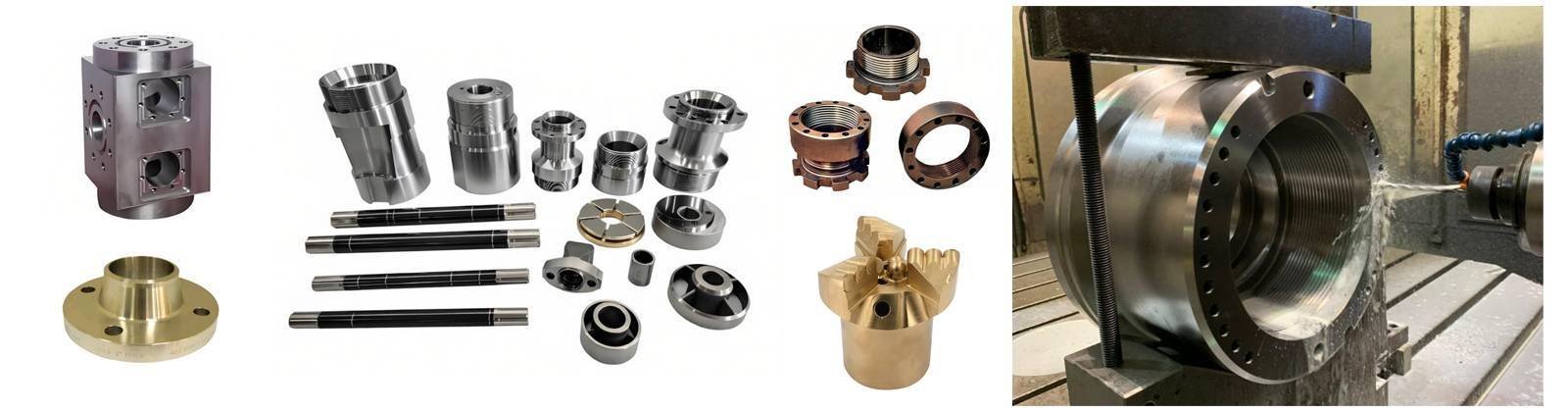
Drill rod is an essential transmission components in oil and gas drilling operations, connecting the rig to the drill bit while ensuring efficient, precise, and safe drilling. Our CNC-machined drill rods are engineered to meet stringent tolerances, resist wear, and maintain structural integrity under extreme high-pressure and high-temperature conditions.
Designed for both standard and custom drilling projects, our drill rod supports a wide range of diameters and lengths, offering high versatility for deep well drilling, oilfield maintenance, and specialized engineering applications.
Drill Rod Technical Advantages & Engineering Value
1. Precision CNC Machining
- Tolerances maintained to ±0.005mm, ensuring minimal vibration and optimized torque transfer during drill rod drilling.
- Multi-axis CNC machining allows for complex features such as drill rods, threads, grooves, and chamfers without compromising structural integrity.
- Surface finish optimized for reduced friction and corrosion resistance, improving operational lifespan.
2. High-Performance Materials
- Constructed from premium alloy steels, titanium alloys, or customer-specified materials.
- Heat-treated to enhance hardness and wear resistance; corrosion-resistant coatings available for harsh downhole environments.
- Material traceability ensured, supporting compliance with ISO 11960 and API 5DP standards.
3. Reliability in Extreme Conditions
- Designed to withstand downhole temperatures up to 150°C and pressures exceeding 20,000 psi.
- Fatigue and tensile testing validate long-term durability, reducing the risk of drilling downtime.
- Consistent mechanical performance under torsion and bending loads, supported by real-world engineering data.
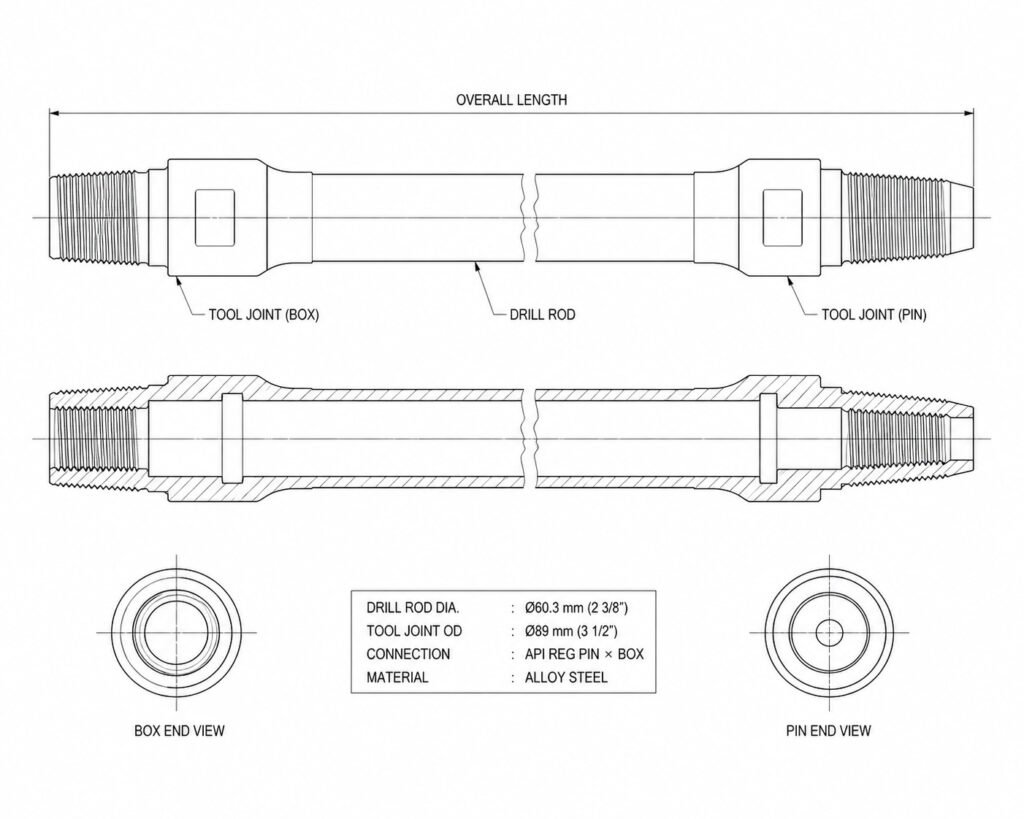
Drill Rod CNC Machining Specifications
| Machining Parameter | Machining Range / Options |
|---|---|
| Material | High carbon steel (e.g., W1 tool steel), alloy steel (e.g., Ameralloy®-7, Ameralloy®-13), tool steel (e.g., high-speed steel like Ameralloy High Speed-2), stainless steel alloy, 45MnMoB high-strength alloy steel, custom alloys |
| Diameter | Customizable |
| Length | Customizable |
| Tolerance | ±0.005mm |
| Surface Treatment | Polished, coated, heat-treated, nitrided |
Drill Rod Size Chart Sample
| DRILL RODS | B (RP622) | BT (RP623) | N (RP622) | NT (RP623) | N HD (RP625) | H (RP622) | HT (RP623) | H HD (RP625) | P HD (RP625) | S HD* (RP625) |
|---|---|---|---|---|---|---|---|---|---|---|
| Rod OD (mm) | 55.9 | 55.6 | 69.9 | 69.9 | 69.9 | 88.9 | 88.9 | 88.9 | 114.0 | 139.7 |
| Rod ID (mm) | 46.1 | 46.1 | 60.3 | 60.3 | 60.3 | 77.8 | 77.8 | 77.8 | 102.0 | 127.0 |
| Wall Thickness (mm) | 4.9 | 4.9 | 4.8 | 4.8 | 4.8 | 5.6 | 5.6 | 5.6 | 6.0 | 6.4 |
| Pin End Length (mm) | 44.5 | 50.7 | 44.5 | 55.4 | 44.5 | 44.5 | 55.8 | 44.5 | 62.8 | 62.8 |
| Thread Pitch (mm) | 8.5 | 10.2 | 8.5 | 12.7 | 8.5 | 8.5 | 12.7 | 8.5 | 10.2 | 10.2 |
| Rod Weight (kg/m) | 6.3 | 7.0 | 7.8 | 7.8 | 7.8 | 11.5 | 11.5 | 11.5 | 17.4 | 21.0 |
| Rod Content Volume (L/m) | 1.67 | 1.67 | 2.86 | 2.86 | 2.86 | 4.80 | 4.80 | 4.80 | 8.10 | 12.70 |
| Hole Volume (L/m) | 2.8 | 2.8 | 4.5 | 4.5 | 4.5 | 7.3 | 7.3 | 7.3 | 11.8 | 16.7 |
| Rod/Hole Annulus Volume (L/m) | 0.40 | 0.40 | 0.67 | 0.67 | 0.67 | 1.00 | 1.00 | 1.00 | 1.60 | 1.40 |
| Rated Max Depth (m) | 1500 | 1800 | 2000 | 2000 | 3000 | 1500 | 1750 | 2500 | 1500 | 1200 |
| Rated Max Pullback (kN) | 95 | 100 | 135 | 145 | 300 | 200 | 200 | 500 | 450 | 535 |
| Rated Max Drilling Torque (Nm) | 440 | 510 | 770 | 810 | 2400 | 1480 | 1600 | 3500 | 2600 | 2800 |
| Min Make-Up Torque to 1000m (Nm) | 400 | 400 | 600 | 600 | 600 | 1000 | 1000 | 2000 | 1000 | — |
| Midbody Min Yield Strength (MPa) | 620 | 620 | 620 | 620 | 620 | 620 | 620 | 620 | 620 | 620 |
| Midbody Min Tensile Strength (MPa) | 725 | 725 | 725 | 725 | 725 | 725 | 725 | 725 | 725 | 725 |
| Displacement Volume (L/m) | 0.76 | 0.76 | 0.97 | 0.97 | 0.97 | 1.50 | 1.50 | 1.50 | 2.16 | 2.70 |
| Burst Pressure - Box Shoulder (MPa) | 55 | 50 | 45 | 45 | 50 | 40 | 40 | 40 | 30 | 15 |
| Burst Pressure - Midbody (MPa) | 90 | 90 | 75 | 75 | 75 | 60 | 60 | 60 | 60 | 45 |
| Collapse Pressure - Midbody (MPa) | 95 | 95 | 70 | 70 | 70 | 60 | 60 | 60 | 65 | 50 |
Application Scenarios & Real-World Engineering Insights of Drill Rods
- Deep Well Drilling
Drilling rod is subjected to high torsional and axial loads. Our drill rod demonstrates <1% elongation under standard load tests, minimizing drill string failure. - Oilfield Equipment Replacement
Custom drill rod machining ensures compatibility with existing rigs, reducing retrofit time and operational friction. - High-Temperature/High-Pressure Environments
Real-world drilling rod testing confirms performance at up to 150°C and 20,000 psi, supporting critical oilfield operations. - Specialized Engineering Projects
CNC capabilities enable precise custom geometries, including drill rod drilling, non-standard threading, stepped diameters, and specialized groove patterns.
Additional applications:
Drill Rod Connection in Oil & Gas Drilling
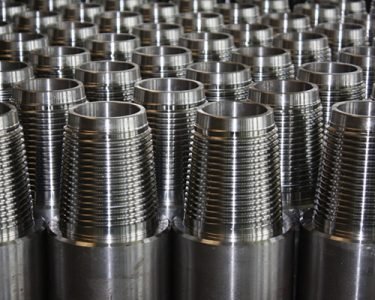
In oil and gas drilling operations, the drill rod connection is a critical point of mechanical integrity. Each connection must transmit torque, axial load, and rotational energy efficiently from the rig to the drill bit while resisting fatigue, wear, and corrosion. Improperly designed or poorly machined connections can lead to operational downtime, drill string failure, or costly maintenance.
Our CNC-machined drill rods are engineered with precision-threaded connections, ensuring:
- Optimal Torque Transfer: Multi-axis machining guarantees thread alignment and engagement accuracy, reducing torsional stress concentrations.
- Fatigue Resistance: Threaded and grooved connections undergo fatigue testing exceeding 100,000 cycles, simulating real downhole conditions.
- High-Pressure and High-Temperature Compatibility: Connections maintain integrity in environments up to 150°C and 20,000 psi, minimizing risk of connection loosening or failure.
- Corrosion and Wear Protection: Advanced surface treatments and coatings prevent thread galling and erosion in high-salinity or abrasive drilling fluids.
By emphasizing precision connection engineering, we ensure drill string stability, reduce vibration, and improve overall drilling efficiency—directly translating to operational cost savings.
Custom Drill Rod Solutions for Specific Drilling Operations
Every drilling project presents unique engineering challenges: varying well depths, torque requirements, drilling fluids, and environmental conditions. Standard drill rods may not meet these requirements, leading to reduced performance or premature failure.
Our custom CNC machining solutions address these challenges with:
- Tailored Thread Profiles: Custom threads, tapered connections, and stepped diameters designed to optimize engagement and load distribution.
- Variable Diameter and Length Configurations: Engineered for non-standard well profiles, including deep wells, horizontal drilling, and deviated boreholes.
- Specialized Surface Treatments: Custom coatings for abrasive drilling fluids, high-temperature environments, or chemically aggressive formations.
- Data-Driven Validation: Each custom solution is modeled and tested for stress, fatigue, and torsional loads using engineering simulations and physical testing.
These custom solutions reduce operational risk, extend drilling rod service life, and allow precise adaptation to regional drilling conditions or specialized oilfield requirements, providing measurable value to engineering teams and procurement decision-makers.
Quality Assurance & Standards Compliance
- Material Certification: Chemical composition and mechanical property verification.
- Dimensional Accuracy: Verified through CMM and precision gauges.
- Industry Standards: API 5DP, ISO 11960, and other client-specific specifications supported.
- Engineering Validation: Fatigue, torsion, and tensile testing documented with engineering reports.
