
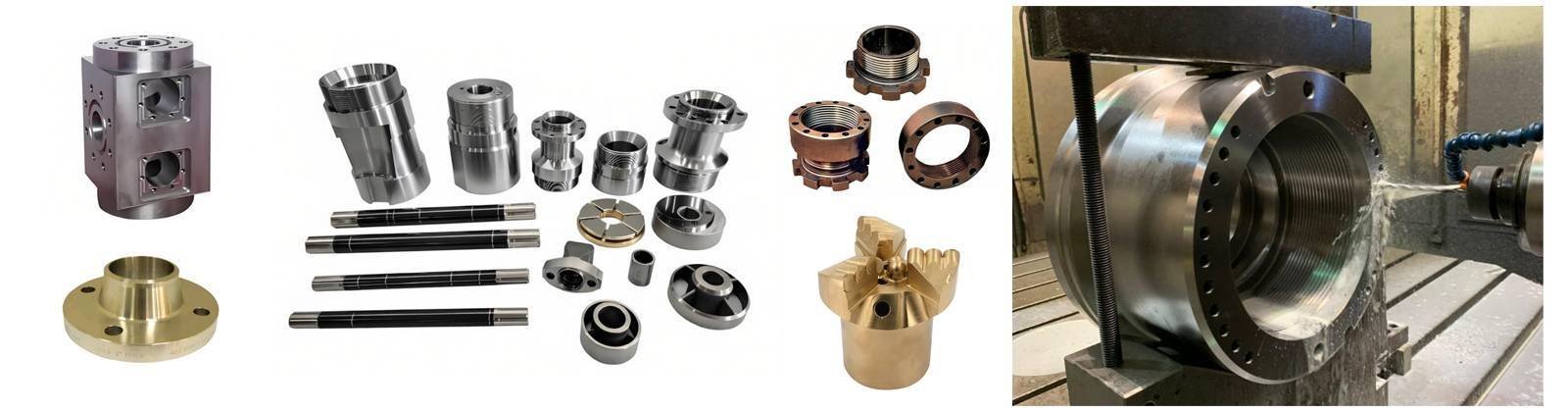
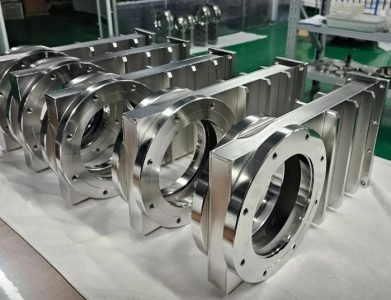
Precision Machining for Vacuum Integrity and Contamination Control
Vacuum manifold blocks require a higher level of precision compared to standard pneumatic components. In vacuum systems, even microscopic leakage, surface imperfections, or internal contamination can significantly affect system performance.
Our on-demand machining services are specifically tailored for vacuum applications, focusing on airtight sealing, ultra-clean internal structures, and stable performance under negative pressure conditions.
Key Requirements for Vacuum Manifold Block Machining
Vacuum applications introduce stricter technical requirements that must be addressed during machining, not after assembly.
- Leak-Tight Internal Structures
Vacuum systems are highly sensitive to leakage. We ensure precise machining of sealing interfaces and tight control of tolerances to minimize potential leak paths. - Superior Surface Finish for Sealing
Rough or uneven sealing surfaces can compromise vacuum integrity. We optimize surface roughness to ensure effective sealing with O-rings, gaskets, or metal-to-metal interfaces. - Internal Cleanliness and Burr-Free Channels
Any residual particles inside the manifold can contaminate the vacuum environment. We apply thorough deburring and cleaning processes to deliver contamination-free internal channels. - Material Stability Under Vacuum Conditions
Material selection must consider outgassing and structural stability. We support materials suitable for vacuum environments, including aluminum and stainless steel, with proper finishing treatments.
Capabilities for Vacuum Manifold Block Machining
Vacuum manifold blocks often feature complex internal geometries and require advanced machining techniques.
We support:
- Deep hole drilling with high positional accuracy
- Cross-hole intersection control for uninterrupted flow paths
- Multi-axis CNC machining for compact and integrated designs
- Precision threading for vacuum fittings and connectors
- Controlled surface finishing for critical sealing areas
These capabilities ensure that each manifold meets both dimensional and functional requirements in vacuum systems.
Material Selection for Vacuum Manifold Blocks
Choosing the right material for a vacuum manifold block is essential for maintaining vacuum integrity, minimizing outgassing, and ensuring long-term dimensional stability. In vacuum applications, material selection affects not only machinability and cost, but also sealing performance, contamination control, and compatibility with operating conditions.
| Material | Key Properties | Typical Applications | Advantages | Considerations |
|---|---|---|---|---|
| Aluminum 6061 | Lightweight, easy to machine, good corrosion resistance | General vacuum systems, automation equipment, laboratory devices | Cost-effective, fast machining, good surface finish | Lower strength than steel, surface treatment may be required |
| Aluminum 7075 | High strength-to-weight ratio, stable structure | High-performance vacuum manifolds, compact precision systems | Stronger than 6061, lightweight, suitable for complex designs | Higher cost, slightly harder to machine |
| Stainless Steel 304 | Excellent corrosion resistance, durable, low contamination risk | Cleanroom equipment, analytical systems, medical vacuum applications | Strong, reliable, suitable for demanding environments | Heavier, slower machining, higher cost |
| Stainless Steel 316 | Superior corrosion resistance, stable in harsh environments | Chemical vacuum systems, semiconductor and laboratory equipment | Excellent chemical resistance, long service life | Higher material and machining cost |
| Brass | Good machinability, stable dimensions, reliable threading | Vacuum fittings, connector blocks, low-to-medium vacuum systems | Easy to machine, good sealing performance | Heavier than aluminum, not ideal for all vacuum environments |
For vacuum manifold machining, aluminum is often preferred when weight, speed, and cost efficiency are priorities. Stainless steel is the better choice when corrosion resistance, cleanliness, and long-term reliability are critical. Brass may be used for specific connector or fitting applications where machinability and thread accuracy are important.
In addition to base material selection, we also evaluate surface finish, sealing interface quality, and post-machining cleaning requirements to ensure the final part performs reliably under vacuum conditions.
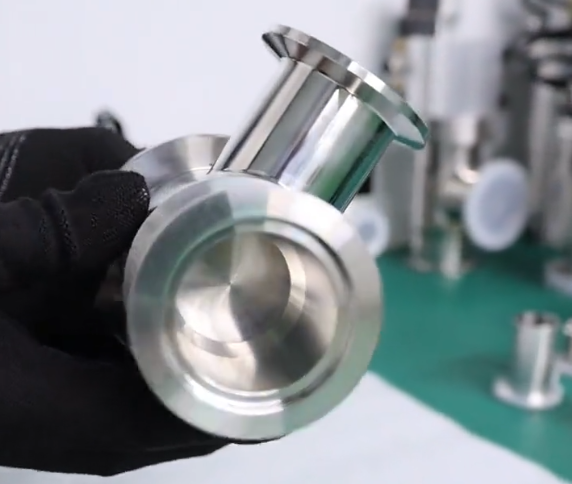
Typical Applications of Vacuum Manifold Blocks
Vacuum manifold blocks are widely used in industries where controlled vacuum environments are essential.
- Oil and Gas Industry
In the energy sector, vacuum manifold blocks are utilized in degassing units and sampling systems. They help remove entrained gases from drilling fluids (mud) and are essential in vacuum distillation processes. Given the harsh environments, these blocks are often machined from corrosion-resistant materials like 316 Stainless Steel or specialized alloys to withstand exposure to hydrocarbons and brine. - Semiconductor Manufacturing
Used in wafer handling and vacuum processing systems, requiring ultra-clean machining and strict contamination control. - Laboratory and Analytical Equipment
Applied in vacuum chambers and testing systems, where sealing reliability and precision are critical. - Medical Devices
Used in vacuum-assisted systems that require stable and contamination-free operation. - Electronics Production
Supports pick-and-place and vacuum handling systems with consistent suction performance. - Packaging and Automation Systems
Used in vacuum gripping and material handling applications, requiring reliable airflow and system responsiveness.
From Prototype to On-Demand Production
We provide flexible manufacturing solutions to match your project needs, whether you require rapid prototyping or ongoing production.
For prototypes, we focus on fast turnaround and design validation, helping you confirm vacuum performance and sealing effectiveness.
For production, we ensure process stability, repeatability, and consistent quality across batches. Our standardized machining workflows and inspection procedures help maintain performance reliability over time.
On-demand production allows you to scale quantities based on actual demand, reducing inventory pressure while maintaining supply flexibility.
Quality Assurance for Vacuum Manifold Block Applications
Vacuum components require stricter quality control compared to standard parts.
We implement:
- Precision dimensional inspection for critical features
- Surface finish verification on sealing areas
- Leak testing (upon request)
- Cleaning and contamination control processes
These measures ensure that each manifold block is ready for integration into high-performance vacuum systems.
Why Choose Our Vacuum Manifold Block Machining Services
We combine machining expertise with application understanding to deliver components that perform reliably in vacuum environments.
Our approach focuses on:
- Preventing leakage at the machining stage
- Ensuring internal cleanliness and surface integrity
- Supporting complex designs with high precision
- Providing flexible, on-demand production capacity
