
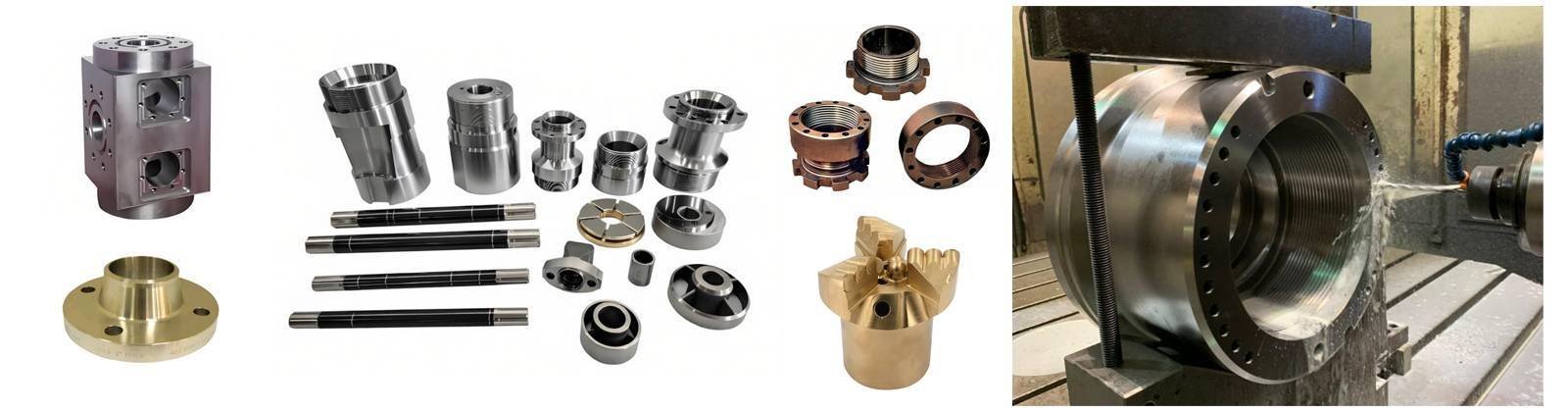
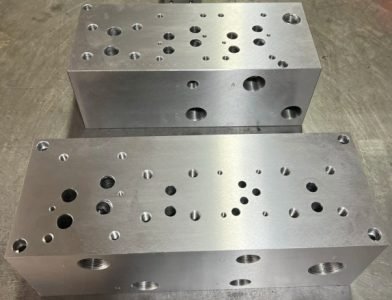
Precision Machining for Reliable Lubrication Distribution Systems
Grease manifold blocks are critical components in centralized lubrication systems, responsible for distributing grease evenly to multiple lubrication points. Compared to air or vacuum systems, grease applications involve higher viscosity media, which places greater demands on internal channel design, sealing performance, and long-term reliability.
We provide custom grease manifold block machining services, focusing on smooth flow paths, clog resistance, and leak-free operation under pressure.
Designed for Grease Flow and System Reliability
In lubrication systems, improper manifold design or machining can lead to uneven grease distribution, pressure buildup, or blockage. These issues can result in insufficient lubrication, increased wear, and equipment failure.
Our machining approach ensures:
- Consistent grease distribution across all outlets
- Smooth internal channels to reduce flow resistance
- Reliable sealing to prevent leakage under pressure
This makes our solutions suitable for both standard lubrication manifolds and fully customized grease distribution blocks.
Material Selection for Grease Manifold Blocks
Material choice is essential for handling grease properties, pressure conditions, and environmental exposure.
| Material | Key Properties | Typical Applications | Advantages | Considerations |
|---|---|---|---|---|
| Aluminum 6061 | Lightweight, good machinability, corrosion resistant | General lubrication systems | Cost-effective, easy to machine | Lower strength for high-pressure systems |
| Aluminum 7075 | High strength, lightweight | High-pressure grease systems | Stronger, suitable for compact designs | Higher cost |
| Stainless Steel 304 | Corrosion resistant, durable | Industrial lubrication, humid environments | Long service life | Higher machining cost |
| Stainless Steel 316 | Superior corrosion resistance | Harsh environments, chemical exposure | Excellent durability | Expensive, slower machining |
| Carbon Steel | High strength, good durability | Heavy-duty lubrication systems | Strong, cost-effective | Requires surface protection |
| Brass | Good machinability, smooth threading | Low-pressure lubrication blocks | Reliable sealing | Lower strength |
Material selection depends on pressure levels, environmental conditions, and system requirements. For heavy-duty or high-pressure lubrication systems, steel materials are typically preferred, while aluminum is used for cost-sensitive or lightweight applications.
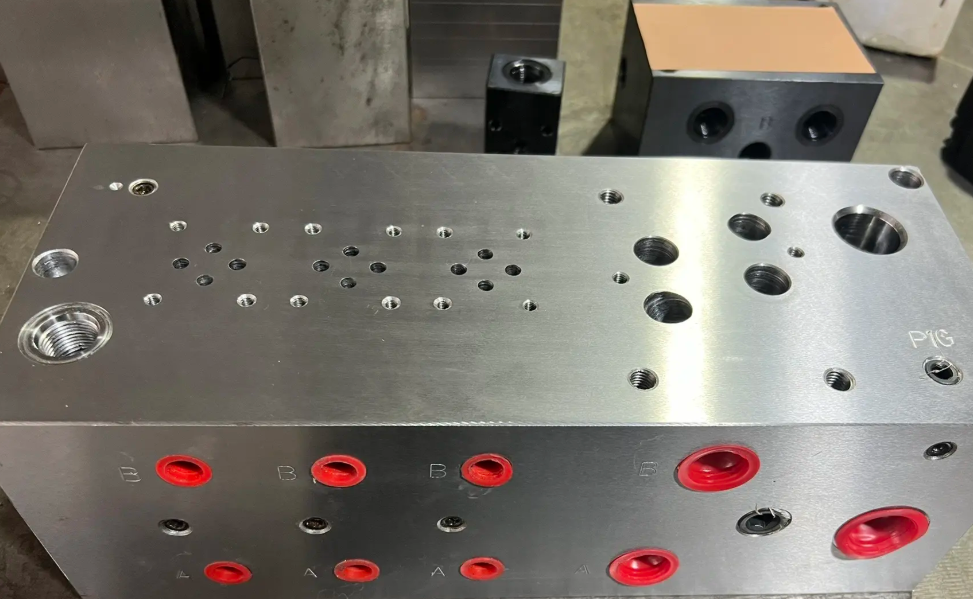
Machining Capabilities for Grease Manifold Blocks
Grease manifold blocks present unique machining challenges due to the viscosity of grease and the need to prevent clogging.
We apply specialized machining processes to ensure:
- Smooth internal channel surfaces to reduce grease resistance
- Accurate cross drilling for proper distribution
- Controlled tolerances for sealing and pressure stability
- Precision threading for grease fittings and connectors
Deburring is especially critical, as any internal burrs can trap grease and lead to blockage over time. We ensure all channels are clean and free of obstructions before delivery.
Common Issues in Grease Manifold Block Machining Services
In grease lubrication systems, many performance issues originate from machining defects rather than design flaws. Due to the high viscosity of grease, even minor machining imperfections can lead to flow restriction, blockage, leakage, or uneven lubrication distribution.
These issues are often not immediately visible but can result in increased equipment wear, system instability, and higher maintenance costs over time.
We address these risks through controlled and specialized machining processes:
- Internal Channel Misalignment
Misaligned cross-drilled channels can restrict grease flow and cause uneven distribution across lubrication points. This may lead to insufficient lubrication in critical areas. We ensure precise alignment through multi-axis CNC machining, optimized drilling sequences, and accurate fixturing. - Burrs and Internal Contamination (Clogging Risk)
Residual burrs or particles inside channels are especially problematic in grease systems, where high viscosity increases the risk of blockage. We apply thorough internal deburring and cleaning to ensure smooth, obstruction-free flow paths. - Poor Sealing Surface Finish (Leakage Risk)
Inadequate surface roughness or improperly machined sealing interfaces can result in grease leakage under pressure. We tightly control sealing surface finish and ensure compatibility with O-ring grooves and fittings to maintain leak-free performance. - Thread Inaccuracy and Connection Failures
Out-of-spec threads can lead to poor sealing, grease leakage, or difficulty during assembly. We machine threads according to international standards (NPT, BSPP, BSPT) and verify accuracy for secure and reliable connections. - Flow Restriction from Rough Internal Surfaces
Unlike air systems, grease flow is highly sensitive to internal surface quality. Rough or uneven channels can significantly increase flow resistance. We optimize internal surface finish to support smooth and consistent grease movement. - Structural Weakness from Improper Machining Execution
Insufficient wall thickness or poorly executed channel layouts can compromise structural strength, especially under high-pressure lubrication conditions. We carefully control machining paths and verify wall thickness to ensure durability. - Inconsistent Quality in Batch Production
Variability between production batches can lead to inconsistent lubrication performance across systems. We standardize machining processes, fixtures, and inspection protocols to ensure repeatable quality at scale.
By eliminating these common machining issues, we ensure consistent grease distribution, reliable sealing, and long-term system stability.
This helps reduce equipment wear, minimize maintenance requirements, and lower the total cost of ownership for lubrication systems.
Typical Applications of Grease Manifold Blocks
Grease manifold blocks are widely used in systems requiring consistent and controlled lubrication.
- Centralized Lubrication Systems
Used to distribute grease to multiple lubrication points in machinery, ensuring consistent and automated lubrication. - Heavy Machinery and Equipment
Applied in construction, mining, and industrial equipment where reliable lubrication is essential for reducing wear and extending service life. - Automotive and Transportation Systems
Used in chassis lubrication and assembly systems requiring stable grease distribution. - Steel and Manufacturing Industries
Supports continuous operation equipment where lubrication reliability directly impacts productivity. - Oil and Gas Industry
Used in drilling and processing equipment where components operate under high load and harsh conditions, requiring durable and leak-resistant lubrication systems.
Why Choose Us for Grease Manifold Block Machining Services
We understand the functional requirements of grease-based systems and tailor our machining processes accordingly.
- Expertise in machining for high-viscosity media flow
- Smooth internal channel finishing to prevent clogging
- Strong control over sealing surfaces and pressure resistance
- Reliable quality for both prototype and batch production
- Engineering support for lubrication system optimization
Built for Long-Term Performance in Lubrication Systems
By combining proper material selection, precise machining, and optimized internal design, we deliver grease manifold blocks that ensure stable lubrication, reduced maintenance, and extended equipment life.
